Revolutionary wave

Surfing the storm swells of history

Featured in

  • Published 20230801
  • ISBN: 978-1-922212-86-3
  • Extent: 200pp
  • Paperback (234 x 153mm), eBook

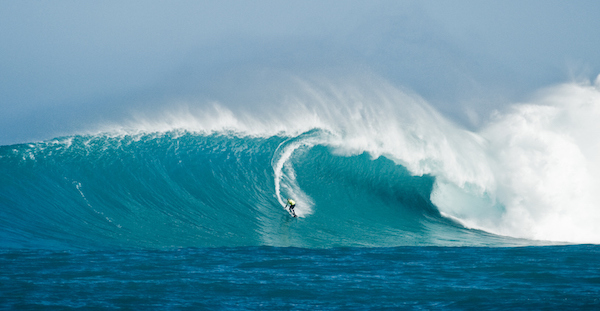
I CAN’T REMEMBER exactly how it started. With a random sighting, perhaps, of a lone surfer carving up a sunlit wave: like entering a cathedral for the first time and seeing all that stained glass. But from that point forward the sight, smell and sound of a storm swell steaming into shore exerted a devastating pull on me. I was a thirteen-year-old provincial boy from Swansea in South Wales, and already a student in the science of Atlantic swells, the way they travel to shore in neat parallel lines, in sets of three – a prime number. Swells have order but it comes from disorder; their source is always chaos. They arrive on shore in graceful step, wearing bridal veils of pale spindrift. What the eye can’t see is their fantastic propensity for violence. 

Surfing is a whole other thing, a primordial art, some might say. The urge to stand up on a wave – pure atavism. I bought my first, second-hand board with my paper-round money for £5. My father refused to help out since he thought surfing was effeminate. He used to say that Wales was a sporting nation, but surfing was not on his list of legitimate sports. Rugby, definitely. Cricket. Boxing. He never once came to watch me surf.

Already a subscriber? Sign in here

If you are an educator or student wishing to access content for study purposes please contact us at griffithreview@griffith.edu.au

Share article

More from author
Land of my fathers

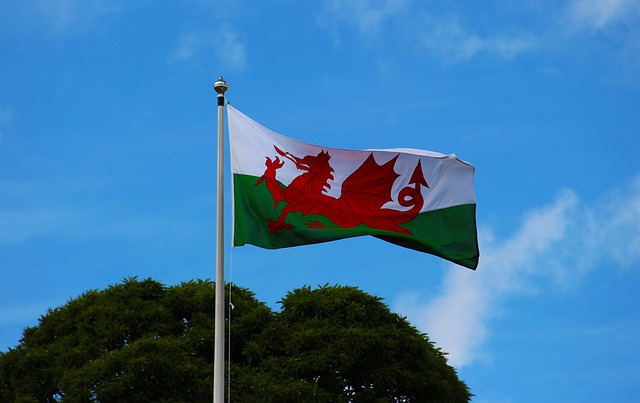
Non-fictionOn Saturday mornings his friends would call in to pick him up for the game. Like him, they were broad and tall and humorous, and never still. None of them ever seemed comfortable indoors. Their faces were fevered from sitting in winter stadiums. Even as septuagenarians they continued to refer to themselves as ‘the boys’, and if my mother materialised before them, they’d blush like children.

More from this edition

Women’s work

Non-fictionIn the 1990s, increasing fiscal and social rationalisation shifted responsibility for leisure from the state to the individual and from the public to the private sphere. Leisure studies, with its emphasis on providing research and data to inform leisure quality, accessibility and access, was rationalised to enhance the ‘bottom line’ of universities that were now attuned to the pragmatic desires of industry sectors.

Etc.

FictionTogether we were drawn mechanically across the road, boredom/fate reeling us in. The lawn sprawled over the grey-brick kerb. The house was painted green. Sellotaped to the windows were rows of pressed aster. The feeling of something too large to explain was heavy in the air. The door squeaked, swinging open, the main door ajar behind it, and through the gap we glimpsed a white hallway, a pile of discarded shoes on one side.

All the boys she ever loved

FictionWhen he left that night with Lacey on his arm, off to go bowling or something, he shook my hand and said Goodnight, David, like it was some big joke or something, and I said Goodnight, David back, and then he was gone and immediately after the door shut, Mel was on my back and saying: You can’t keep doing this, and when I just raised my bad hand up and looked at her, she said: Going so hard on them like that. It’s not doing our daughter any favours.  I don’t know why you’re talking about this like it’s some sort of pattern. I’ve only ever got to meet two of them. And she said: Exactly.

Stay up to date with the latest, news, articles and special offers from Griffith Review.