Featured Stories

Songs of the underclasses
Non-fictionBefore his back deteriorated for good, Diē had imagined becoming a tour guide in his retirement years. To this end, he farewelled our geriatric SUV and bought a fourteen-seater HiAce. After I got my P-plates, he pulled out the back two seats so I could drive it legally and insisted I go on long drives – though never unsupervised. Wǒ zhīdào bu lōgǐcǎl, dànshì méibànfǎ, said Diē. Nǐ shì wǒ de nǚ’ér. ‘I know it’s illogical, but you are my daughter.’
Diē was the best driver I knew. ‘When you drive, you stare at everything but see nothing. You’re inexperienced,’ he lectured. ‘When I drive, I stare at nothing – I can chat, I can sing. But I see everything. Parking spaces, jaywalkers with a death wish, doggies and kitties. And for hours at time, without breaking concentration. It’s like meditation.’
Diē’s love language included showing me footage of near-miss traffic incidents on WeChat. Each trip of ours decreased my risk of appearing in his feed. These hours became the most time we had ever spent together. ‘I write stories too,’ said Diē, during one of our drives. It was early 2024, and he was accompanying me to a writing workshop in Parramatta.

wet flowers
GR Onlinenames: zoloft. lyrica. cipramil. avanza. neulactil. quetiapine. cymbalta. because. because of it. depression. major depression. dysthymia. melancholia. intractable. medication-resistant. they’re called clamshells, those little plastic cavities. yet they never yield a pearl.

Certified flesh
GR OnlineBody horror is a filmic genre, inseparable from cinema and related in particular to the revolution in special effects that began in earnest in the 1960s. The emergence of the Canadian director David Cronenberg was catalytic, heralding as it did a squishy synthesis of big ideas and sweaty latex, a cinematic imaginary unlike anything hitherto labelled ‘horror’. In body horror, corporeality itself constitutes the main source of the uncanny.
Latest Edition
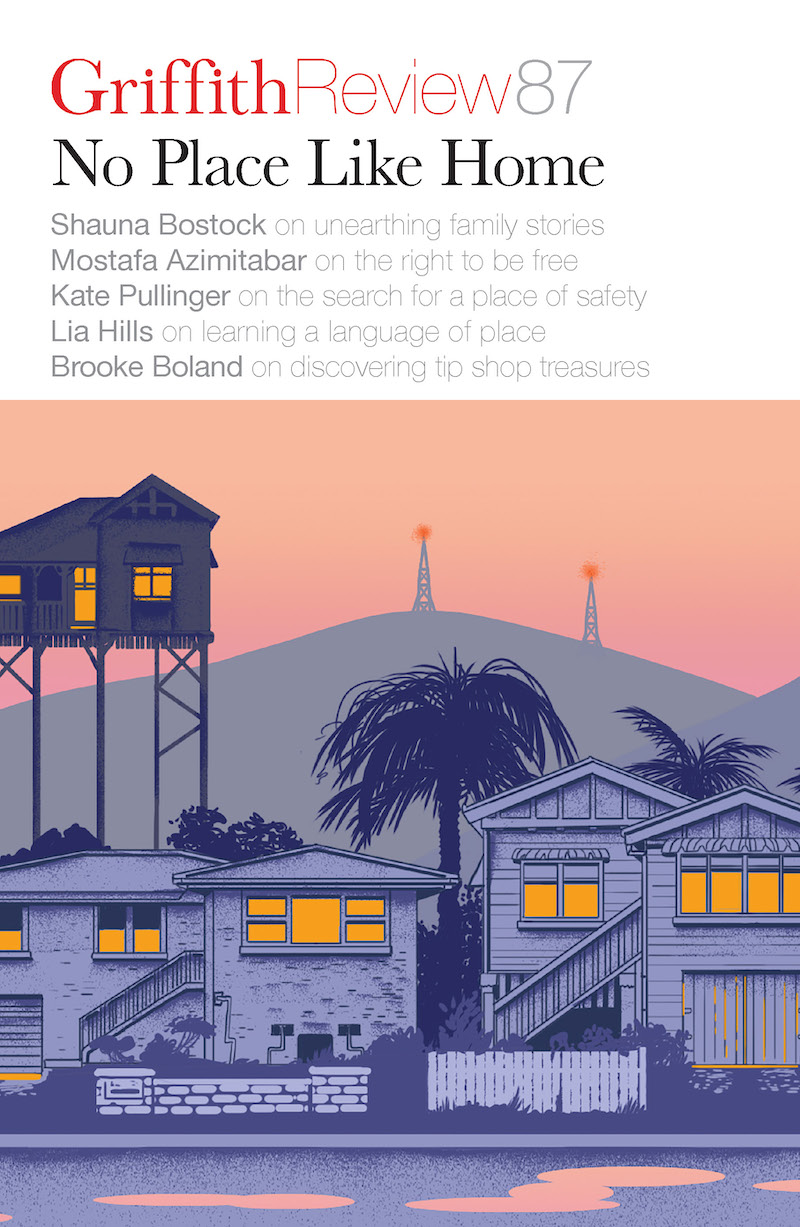
No Place Like Home
There’s no place like home – although home isn’t always a place. It could be a feeling, an instinct, a language, a person, a memory; it could be where we long to return or can’t wait to escape. But for all its symbolic resonance, home also has myriad material consequences: from the picket fence to the political arena, it raises questions of sovereignty, identity, economics, class and domestic labour.
Featured Collection
Women of letters
From the glass ceiling to the surface of the moon, these pieces dissect the complications and contradictions of twenty-first century gender roles.
Holding the baby
Where I live, what I earn and my level of education: these will all influence not only my decision to have a baby but the experiences that baby will then have. These four factors – education, geography, wealth and birth rate – loop around one another in infinite iterations. People in regional and remote Australia have more children younger; they also have lower levels of educational attainment.

Moonwalking
The first woman on the Moon will have to think carefully about her first words, as they will resonate for generations into the future. Neil Armstrong chose his famous ‘one giant leap’ line himself; but in this case, knowing what’s at stake, there’s bound to be a committee who gives this long and considered thought.
Erasure
It was thanks to a series of deliberate decisions made during the nineteenth century that women’s critical labours were designated ‘unproductive’ and simply wiped from view. Key to these erasures was Alfred Marshall, the revered father of neoclassical economics, who advocated strict limits on women’s choices lest they behave selfishly.

The chemical question
It’s just that time of the month. It’s only the baby blues. It’s the change, it’ll pass. It’s just your hormones. Most women have experienced a dismissal like this at some stage in their lives, whether for a genuine mental health issue or for something as minor as offering a differing opinion. But the trivialising of issues deemed ‘hormonal’, and the dismissal of associated mood disorders, can have fatal consequences.
The unwritten rules
Patriarchal power and control occurs silently, without fanfare, through institutions and their structure, including legal institutions and the family. It is in this conceptualisation that the recent public discussion in Australia of misogyny and the ‘gender card’ became distracted, focussing on a personal hatred of individual women as key rather than the daily reproduction of significant structural inequality.

Not just good girls
Women in public life in Queensland experienced criticism and ridicule that was sharper and more personal than that directed to their male counterparts. They were often said to have abandoned their rightful roles as wives and mothers, were accused of being too noisy, too silent, too dumb, too much of a smarty pants. It was suggested that wealthy women had a ‘silver spoon’, while the few working-class women who struggled into the ranks above were said to lack grace and class.
GR Online - Free to read
wet flowers
there and then gone again. you remember: a plastic-capped thermometer in your ear, blood-pressure cuff on your arm. it tightens. you feel your pulse thumping painfully against the velcro straps, protest thickening in your mouth. unsaid. a child cries as their trolley-bed is wheeled into the recovery room. water in a paper cup. sandwiches cut into little triangles. pen light in your eyes.
Certified flesh
Body horror is a filmic genre, inseparable from cinema and related in particular to the revolution in special effects that began in earnest in the 1960s. The emergence of the Canadian director David Cronenberg was catalytic, heralding as it did a squishy synthesis of big ideas and sweaty latex, a cinematic imaginary unlike anything hitherto labelled ‘horror’. In body horror, corporeality itself constitutes the main source of the uncanny.
Working from home
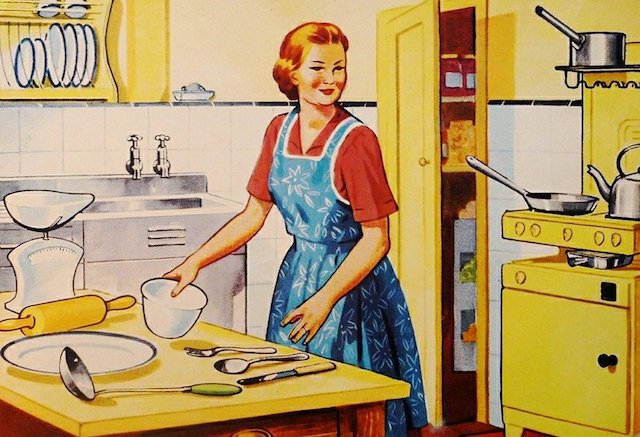
Not surprisingly, the tradwife movement has been broadly criticised for its conservative sentiments. I agree with these assessments… But much of the discussion in response to the trend also, I think, tends to miss the point. Because if we look closely, we can see that the central concerns of the tradwife movement are indeed feminist concerns.
Fire and finitude
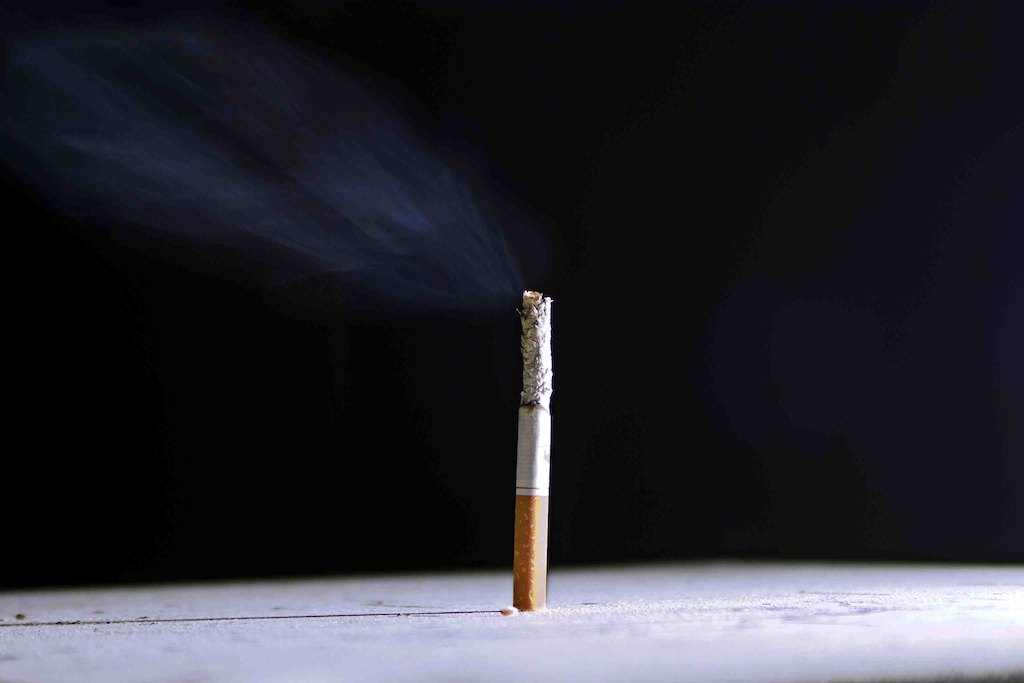
To smoke is to make yourself porous. It is also to expand yourself. Your lungs open to receive the incoming vapour. In turn, as the nicotine it contains hastens towards every organ, crossing the blood-brain barrier in a matter of seconds, your mind seems to reach out in an unencumbered embrace.

Recent Editions