
Featured in
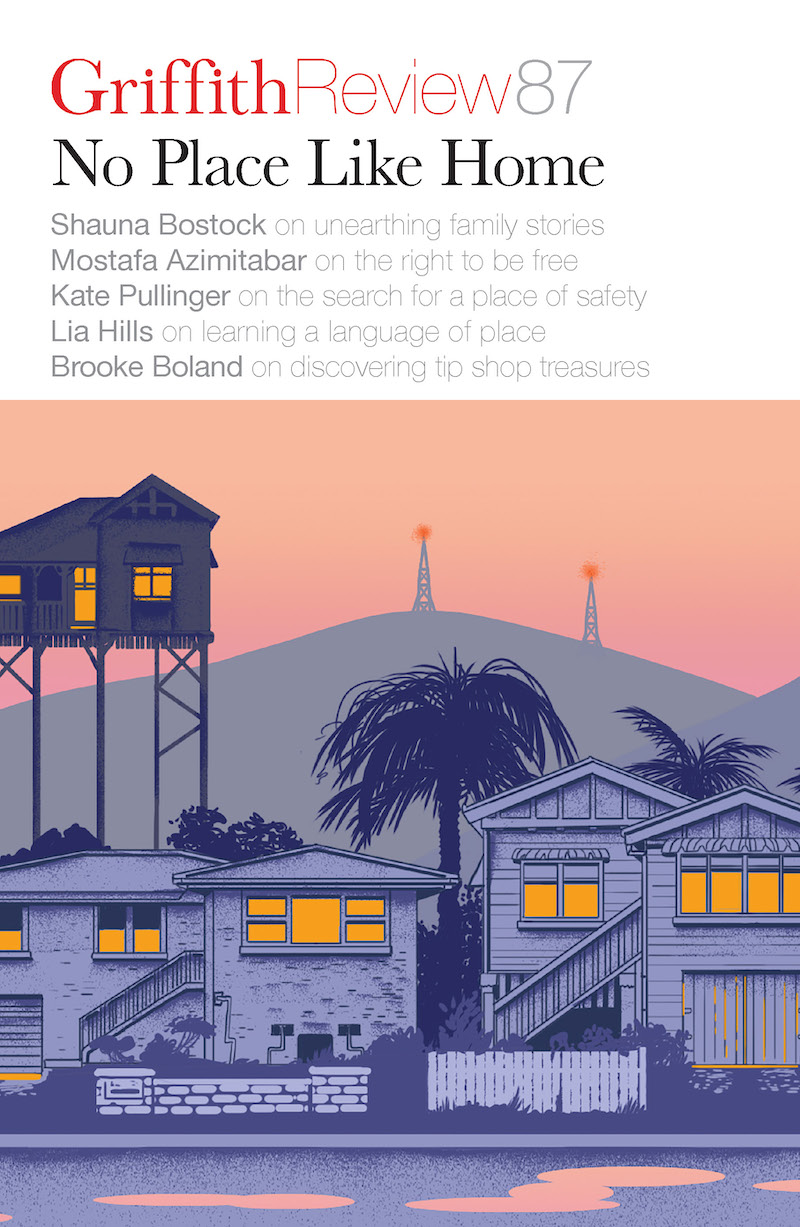
- Published 20250204
- ISBN: 978-1-923213-04-3
- Extent: 196 pp
- Paperback, ebook. PDF
Already a subscriber? Sign in here
If you are an educator or student wishing to access content for study purposes please contact us at griffithreview@griffith.edu.au
Share article
More from author
Early adopter
FictionONE TWO THREE running, jumping hops and I launch into the sky, wings beating down hard, plastic feathers scraping car park gravel. It’s easier...
More from this edition
Interstitial
Non-fictionAmerican sociologists John and Ruth Hill Useem first coined the term ‘third culture kid’ in the 1950s to describe the experience of Americans who were raised abroad in a culture different to their birth culture. This term reflects the way children raised overseas straddle three cultures: the culture of their birth, the culture within which they are raised, and a third, nebulous culture – the culture they create through the way they learn to relate to each other. The third culture is interstitial, not an amalgam. ‘Third culture kid’ (TCK) is a term often used as shorthand. Many TCKs will have experienced more than one cultural shift too. Those with diplomatic, military or missionary families are often raised in multiple countries, and others, like me, will continue their travels overseas as adults too, exercising the global and economic mobility they know well.

Trash and treasure
FictionIn the middle of the night he had a dream where the dirty pasta bowls he’d left out were on fire, smoking up the apartment. When he shot up in bed, he could still smell the smoke. He remembered Karim, the whole previous day and night flashing through his head. In five strides he was in the living room. Karim wasn’t on the couch. The balcony door was open and he was out there, shirtless, leaning on the balustrade smoking a cigarette. The nodules rising out of his spine pinged the moonlight over his back like a prism. Ben went out, shut the door behind him, leaned over the balcony by Karim. Their arms touched and neither of them pulled away. The forum was emptier than empty. Completely still, like they were peering into a photograph.
Notes from a Sunshine City
GR OnlineI feel like our collective relationships with The House™ as a motif changed so much during that time; the housing crisis, lockdown and climate apocalypse were looming large all at once. Personally, I developed this kind of bizarre voyeuristic relationship with the suburbs and houses I passed on my mandated mental-health walks.
