
Featured in

- Published 20250204
- ISBN: 978-1-923213-04-3
- Extent: 196 pp
- Paperback, ebook. PDF

In 2019, a tiny, six-seat restaurant in a one-bedroom Brunswick apartment swiftly became one of Melbourne’s most sought-after dining experiences. With its degustation menu of traditionally prepared Korean cuisine and its uniquely cosy surrounds, CHAE soon had a string of awards and a waitlist of more than 8,000 people. Four years on, the business may have relocated – chef Jung Eun Chae and her partner, restaurant manager Yoora Yoon, moved to the Victorian town of Cockatoo in 2022, where they now run CHAE from their house in the mountains – but its guiding principles remain the same: to make guests feel at home as they experience the dynamism of Korean cuisine and culture. In this interview with Griffith Review Editor Carody Culver, Chae shares her story of culinary connection.
CARODY CULVER: Where did you grow up in South Korea, and what are your most enduring memories of the food you ate when you were a child?
JUNG EUN CHAE: I was born and raised in Seoul, and some of my most enduring food memories are of my mom making large batches of kimchi for her siblings. I also remember rows of onggi [clay jars] filled with jang – traditional Korean condiments – at my grandmother’s house in Jeolla, in the southern part of Korea.
CC: Based on what I’ve read in other interviews, your mum is also a phenomenal cook! How would you describe the influence she’s had on your relationship with food and cooking?
JEC: My mum was the eldest of her seven siblings, and in the past, the first daughter typically bore the responsibility of feeding the family, so she took up cooking out of necessity. Growing up, I watched her make large batches of kimchi to last the entire year, and ferment condiments like doenjang [soybean paste] and gochujang [chili paste]. These traditional practices were a natural part of our household, and my palate became accustomed to homemade, fermented foods. Helping her with chores also gave me a basic understanding of traditional techniques for making authentic Korean dishes.
This upbringing gave me a significant advantage when running a Korean restaurant, as I developed a deep appreciation for the subtleties and nuances that come from eating and preparing this kind of food.
CC: You left South Korea in 2006 and moved to Australia, where you trained as a chef and worked in some of Melbourne’s most celebrated fine-dining restaurants. What prompted this move, and what drew you to pursue a culinary career?
JEC: Moving to Australia and finding a career in the food industry was, in many ways, a happy accident. Korea is known for its fast-paced and competitive society, and as a university student majoring in industrial design, I wasn’t particularly passionate about my studies and couldn’t envision a clear career path.
At the time, many of my friends were going overseas on working holiday visas to experience life abroad and broaden their perspectives. I was torn between Japan and Australia, but ultimately chose Australia because it was more affordable and the lifestyle appealed to me. So I moved here in 2006 and initially enrolled in the pastry program at William Angliss Institute [in Melbourne]. Not long after, I switched to cookery, as I found the process of combining ingredients to create delicious flavours fascinating. The subtle improvements in my skills through repetitive practice were incredibly satisfying.
Completing the program led to my first job in the industry and, from there, I stayed on and worked my way up the ladder, aiming for a career in fine dining.
CC: In 2019, you opened your micro-restaurant, CHAE, in your Brunswick apartment. What made you decide to run a home-based restaurant? Are there many other restaurants of this kind in Australia?
JEC: There was a time when I had to take a break from work after injuring my ankle in a minor car accident. Working in the kitchen requires long hours of standing and physical labour, so I wasn’t sure if I could continue my career in the fine-dining scene, even after recovery, as I needed ongoing physiotherapy.
I’d always had a vague dream of running my own one-table private-dining restaurant, so during my recovery I decided to give it a shot. CHAE didn’t begin with a grand vision of becoming a dining destination. I would have been happy just covering my living expenses. When I launched the concept in 2019, there were one or two others doing something similar, but it was still a relatively new idea.
CC: How does the environment of your own home change the experience of cooking for guests – both for you and for them?
JEC: It has several advantages. The intimate, private setting naturally creates a close connection between the chef and diners, making it easier for the chef to share the stories, heritage and traditions behind each dish. For diners, the cosy, welcoming atmosphere makes them feel as though they’ve been invited into a friend’s home.
From a business perspective, a home-based restaurant comes with fewer overhead costs, such as rent and wages. This allows me, as the business owner, to deliver high-quality food at a more affordable price, as these expenses are not factored into the food cost. Additionally, unlike at a conventional restaurant, I can eliminate the typical distractions of running a business and focus entirely on delivering a quality dining experience, ensuring each guest is personally attended to and enjoying their time.
CC: What were some of the biggest challenges you faced in establishing the business?
JEC: Since the home-based restaurant concept was still relatively new, we were figuring out the relevant council permits as we went along. [When we moved in 2022] we mistakenly assumed we could start operating at our new venue in Cockatoo right away, but we faced delays as we worked through ongoing communication with the council to find a way to obtain an appropriate permit for this unique business model.
Fortunately, a close friend allowed us to use his venue for pop-up events during this challenging time, which helped us stay afloat during the transition. Like many other business owners, we found the pandemic to be a particularly tough period. Whenever the government announced new guidelines, I had to reach out to ensure our restaurant complied, as nothing quite fit the mould of our home-based concept.
CC: What led you to change locations? How have the semi-rural surrounds of Cockatoo changed the cooking and dining experience?
JEC: My cooking style is deeply rooted in traditional Korean fermented condiments, which depend on nature to develop their flavours. The tranquil, peaceful environment of the Dandenong Ranges felt like the perfect complement to this approach. It not only provides a space for guests to enjoy the food but also offers them a chance to unwind and relax, away from the rush of everyday life.
Fermented condiments like doenjang, gochujang and ganjang [soy sauce] require ample space for proper storage, traditionally kept in clay jars called onggi. The spacious outdoor area at our new location allowed us to import these onggi from Korea, enabling us to store our ferments authentically. This makes us the only restaurant in Australia with such a traditional set-up.
CC: Your menu at CHAE showcases Korean cuisine made using traditional methods, and there’s been a growing appetite (excuse the pun!) for Korean cuisine in Australia lately. Why do you think this is?
JEC: I believe this is largely influenced by the Korean entertainment industry, also known as Hallyu. Korea has done, and continues to do, an incredible job of promoting positive cultural images through music, dramas and films. These entertainment channels have helped people around the world develop a strong connection to Korea’s dynamic culture. Additionally, eased visa policies and relaxed travel restrictions have allowed many tourists to visit Korea. According to my research, between 160,000 and 180,000 Australians visit Korea each year to experience its rich heritage and vibrant culture firsthand. Thanks to this global trend, Australians are either already familiar with Korean cuisine or are eager to explore it further.
CC: How do you put together your menus at CHAE? What are some of your guiding instincts or most important considerations?
JEC: Our menu changes every two months and is heavily influenced by seasonal produce. My approach to cooking focuses on using minimal seasoning to highlight the natural flavours of the ingredients. Of course, the seasoning itself is a result of Korea’s long tradition of natural fermentation and ageing, which brings out the depth and richness of jang.
CC: What are your plans for the future of CHAE?
JEC: I plan to continue operating CHAE as a small, intimate dining experience because that’s what we’re known for, and it’s the reason our diners come: to experience the close connection and private atmosphere we offer. Expanding the restaurant would compromise that, and I don’t want to lose what makes CHAE special for both us and our guests.
However, over the past five years of running CHAE, I’ve realised there’s a niche market for traditional Korean jang in Australia. Australians are genuinely fascinated by Korea’s rich culinary heritage and deeply appreciate the time and effort that goes into making these condiments. If we can find the right narrative and effectively show how these jang can be incorporated into their kitchens, I strongly believe there’s a significant market for it.
Currently, I make small batches of these condiments for sale exclusively to diners at CHAE. But in the near future our goal is to set up a small factory to produce them on a larger scale and make them available to a wider audience through retail.
CC: There’s such an enduring connection between food and culture, and between food and memory – particular tastes or smells can bring you back to a particular time and place in your life. What’s it like for you to share the food of your country with guests from all over Australia?
JEC: The first word that comes to mind is gratitude. I deeply appreciate our diners for showing such genuine interest in our culture. It’s also fascinating to see how much attention Korean cuisine is receiving these days. When I first moved to Australia, many Korean restaurants adjusted their flavours to suit local tastes. However, I’ve noticed a shift recently. Our diners now come to our venue specifically to experience the authentic flavours of Korean cuisine.
My cooking is heavily influenced by my mother, who is from Jeolla in the southern part of Korea. This region is known for its use of salted seafood in dishes, including kimchi, resulting in robust and sometimes strong flavours that can be challenging even for Koreans from the capital. Despite this, our guests have warmly embraced these authentic regional flavours and the stories behind them.
This interview was supported by the Korean Cultural Centre Australia.
Image by Stephen Roberts via Canva.com
Share article
About the author
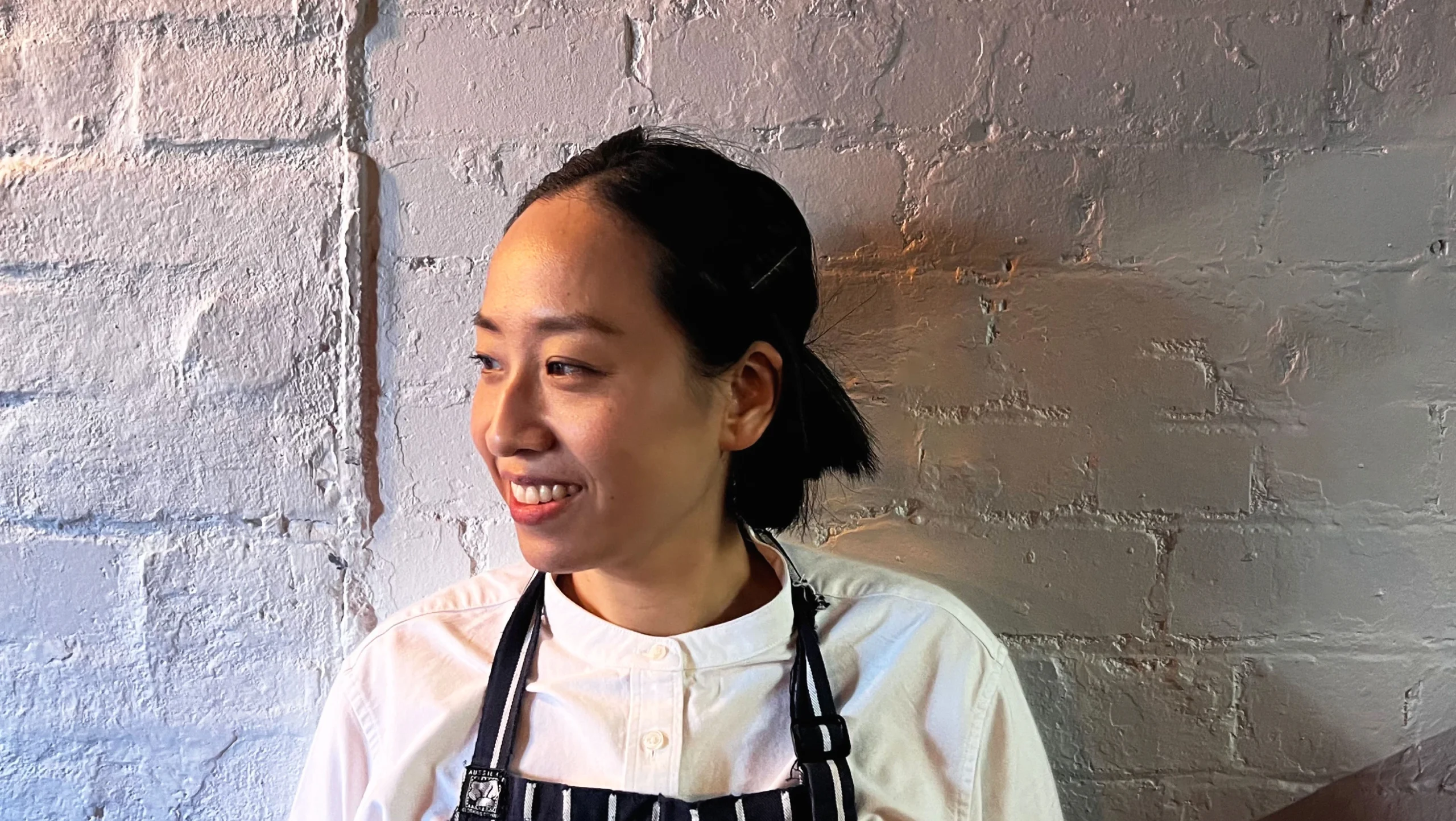
Jung Eun Chae
Originally from South Korea, Jung Eun Chae, formerly of Cutler & Co., launched CHAE in late 2019 from her apartment in Melbourne’s north. In...
More from this edition

Sissys and bros
Fiction‘Sydneysiders woke up to a red dawn this morning due to an eerie once-in-a-century weather phenomenon.’ This was straight after school, before my shift. Channel 9’s Peter Overton was blaring from the TV. My five sisters and two brothers yelled about Mumma hogging the remote. Overton’s robot voice followed me into my room. I tugged off my Holy Fire High School blazer. Our emblem: Bible beneath a burning bush. Our motto: Souls Alight for the Lord and Learning. Fumbled through the dirty laundry basket for my dress-like work shirt that stunk of rancid onion. Our logo: a pepperoni pizza wearing a fedora and holding a Tommy gun. Our motto: Happy Mafias Pizza: Real Italians Leave the Gun and Take the Cannoli.

Mudth
Non-fictionMy family has its roots in several parts of the world: the Lui branch in New Caledonia, the Mosby branch in Virginia in the US, and the Baragud branch in Mabudawan village and Old Mawatta in the Western Province of PNG. Growing up, I spent most of my childhood with my Lui family at my family home, Kantok, on Iama Island. Kantok is a name we identify with as a family – it’s not a clan, it’s a dynasty. It carries important family beliefs and values, passed down from generation to generation. At Kantok, I learnt the true value and meaning of family: love, unity, respect and togetherness. My cousins were like my brothers and sisters – we had heaps of sleepovers and would go reef fishing together, play on the beach and walk out to the saiup (mud flats). I am reminded of these words spoken by an Elder in my family: ‘Teachings blor piknini [for children] must first come from within the four corners of your house.’

The blue room
FictionMum did not tell us that Sabina had tried to kill herself. She said that she was unwell, and because she was unmarried and her children lived interstate Sabina would stay with us while she convalesced. We figured it out after she arrived; she did not appear sick, but lively and plump. Nor was there any regularity to her medical appointments. Though Phoebe was irritated that she would have to share her bathroom we found the situation morbidly glamorous, the sick woman with the elegant name whose stay would end with recovery or its opposite. So many sibilant words: suicide, convalescence, Sabina. Having no knowledge of death or any conviction we would ever die, suicide seemed tinged with romance. That Sabina lived confirmed our belief that death was not serious.
