
Featured in
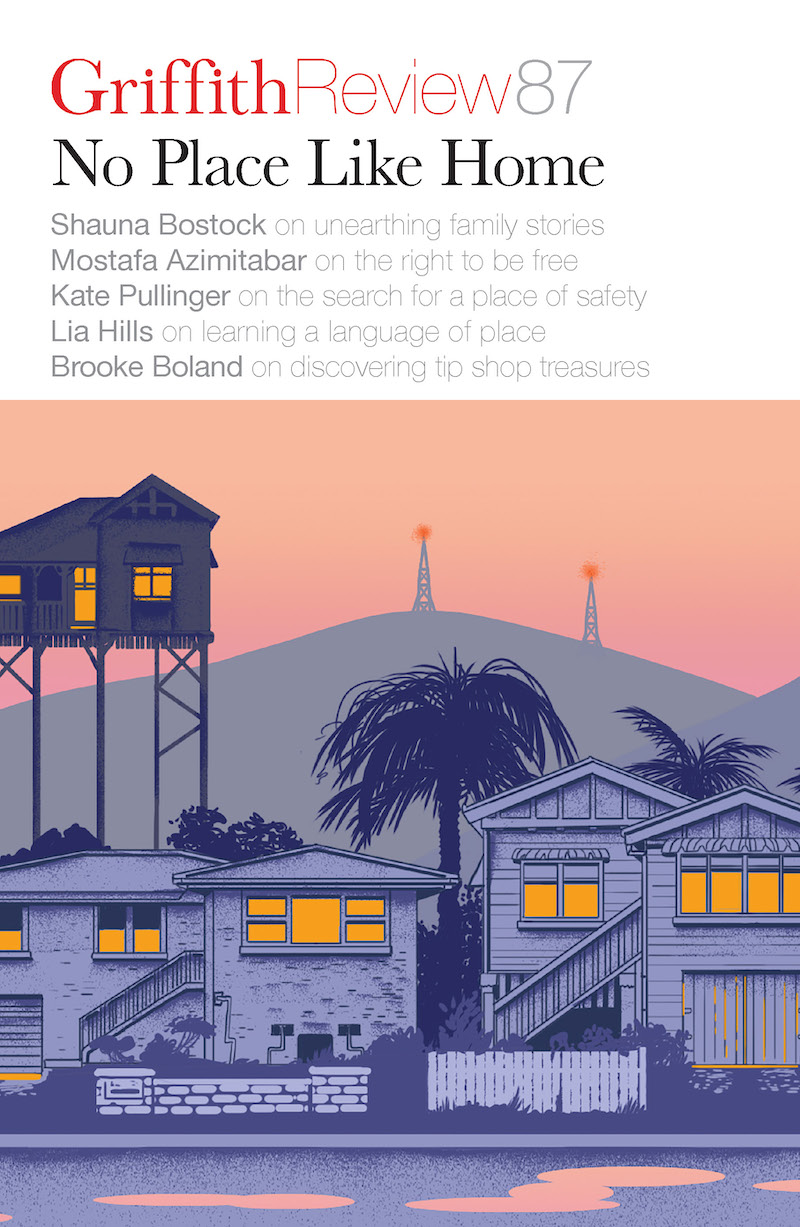
- Published 20250204
- ISBN: 978-1-923213-04-3
- Extent: 196 pp
- Paperback, ebook. PDF

Already a subscriber? Sign in here
If you are an educator or student wishing to access content for study purposes please contact us at griffithreview@griffith.edu.au
Share article
More from author

Psychobabble
Much of my life has been spent in search of frameworks to help me understand the trauma that was transacted in my upbringing, and the cataclysmic emotional and relational changes wrought. Moving between the psychological illiteracy of the world I was raised in and the fluency of our current era feels like time travel.
More from this edition

Songs of the underclasses
Non-fictionDiē was the best driver I knew. ‘When you drive, you stare at everything but see nothing. You’re inexperienced,’ he lectured. ‘When I drive, I stare at nothing – I can chat, I can sing. But I see everything. Parking spaces, jaywalkers with a death wish, doggies and kitties. And for hours at time, without breaking concentration. It’s like meditation.’ Diē’s love language included showing me footage of near-miss traffic incidents on WeChat. Each trip of ours decreased my risk of appearing in his feed. These hours became the most time we had ever spent together.

Safe as houses
IntroductionSometimes, if I can’t get to sleep, I imagine I’m back in the house where I grew up... I like to go back there in my mind’s eye, conjuring the slightly crooked hallway, the doors that never neatly fit their frames, the tiny kitchen with its overwhelmingly wheaten spectrum of 1980s browns. Like handwriting on old foolscap, the more specific details have long faded with time, but the feeling remains: that ineffable sense of calm and familiarity that I associate with being home.
The blue room
FictionMum did not tell us that Sabina had tried to kill herself. She said that she was unwell, and because she was unmarried and her children lived interstate Sabina would stay with us while she convalesced. We figured it out after she arrived; she did not appear sick, but lively and plump. Nor was there any regularity to her medical appointments. Though Phoebe was irritated that she would have to share her bathroom we found the situation morbidly glamorous, the sick woman with the elegant name whose stay would end with recovery or its opposite. So many sibilant words: suicide, convalescence, Sabina. Having no knowledge of death or any conviction we would ever die, suicide seemed tinged with romance. That Sabina lived confirmed our belief that death was not serious.
