
Featured in
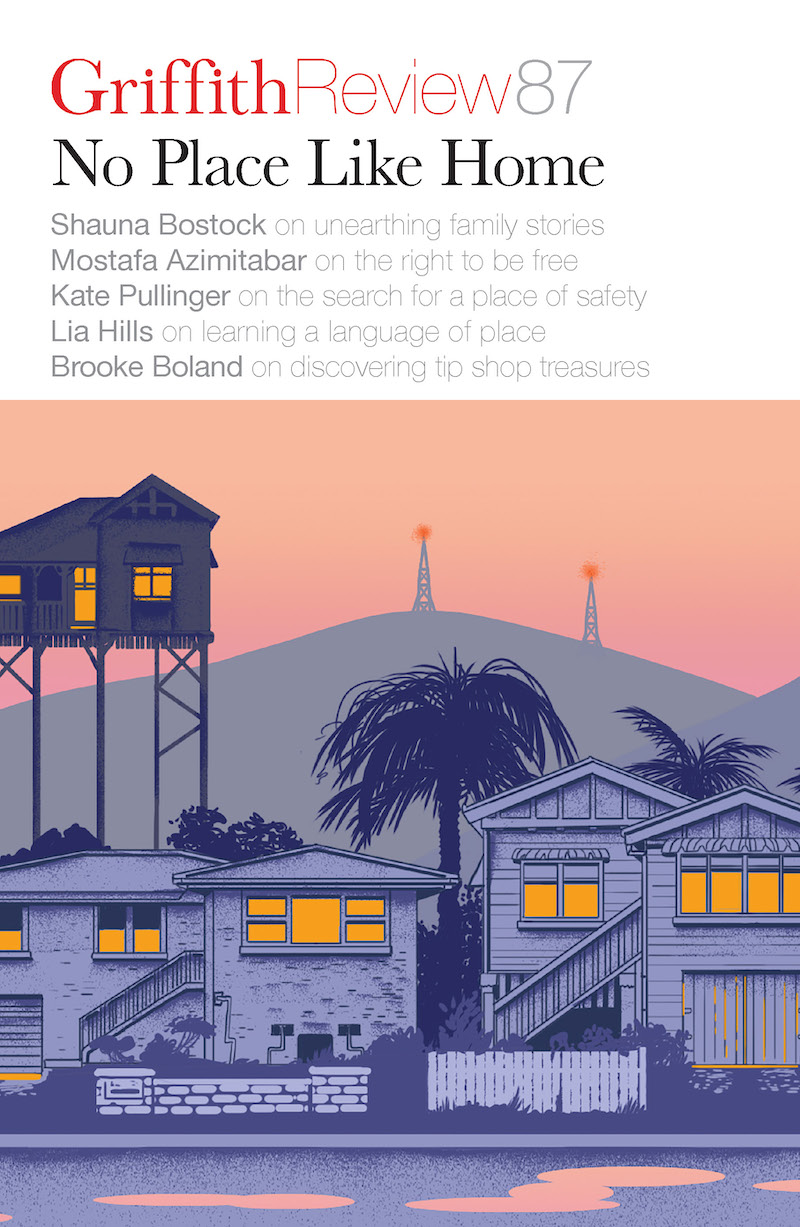
- Published 20250204
- ISBN: 978-1-923213-04-3
- Extent: 196 pp
- Paperback, ebook. PDF
…if I were asked to name the chief benefit of the house, I should say: the house shelters daydreaming, the house protects the dreamer, the house allows one to dream in peace.
– Gaston Bachelard, The Poetics of Space
SOMETIMES, IF I can’t get to sleep, I imagine I’m back in the house where I grew up. (‘Grew up’ is probably a stretch – we lived there for nearly seven years, beginning when I was eight, but it was the longest we’d lived anywhere and when the time finally came, I found it hard to countenance the idea of leaving.) It was an old cottage on a hill in south-east England, and it had creaking floorboards, beamed ceilings and a long, unruly garden. There’d been a death upstairs the year before we moved in – one of the previous owners had had cancer and passed away in the master bedroom, surrounded by his family – but it was a peaceful house, and at well over a hundred years old must have witnessed more than one life reach its end. I like to go back there in my mind’s eye, conjuring the slightly crooked hallway, the doors that never neatly fit their frames, the tiny kitchen with its overwhelmingly wheaten spectrum of 1980s browns. Like handwriting on old foolscap, the more specific details have long faded with time, but the feeling remains: that ineffable sense of calm and familiarity that I associate with being home.
You likely know this feeling, too. If you’re lucky, like I am, it doesn’t only exist in recollection or imagination but in your present reality. Yet home can often be an uncertain prospect, whether because of dispossession, war, climate change, domestic violence, family discord, economic inequality…the list goes on. You may not associate it with a specific dwelling but with a person, a pet, a language, a landscape, a story, a song. But the idea of home is something we all have in common, even as the shape it takes transforms across time, place and experience.
NO PLACE LIKE Home traverses suburbs, cities and countries to reveal just some realisations of this idea. You’ll visit a tip shop, a Western Sydney pizza joint, a Midwestern American town, a London car park, a Cockatoo restaurant, the Manus Island detention centre, Wotjobaluk Country, Mer Island, a Denny’s, a post-apocalyptic world – and many more surprising and compelling locales. You’ll discover what’s really driving Australia’s property problem, how home can be wielded as a weapon of cultural destruction, why we’re haunted by the place we come from, what it means to be a third culture kid, how we hide secrets in our domestic interiors, how translation can tighten family ties, what it means to leave home and come back changed – and that’s by no means an exhaustive list of the stories in this collection.
This is a special edition in more ways than one. We’re delighted to have worked with two exceptional contributing editors, each of whom commissioned one essay in No Place Like Home: Samantha Faulkner worked with Jacinta Baragud on her piece ‘Mudth: My family, my home’, and Darby Jones worked with Barrina South on her piece ‘Follow the road to the yellow house: Seeking creative solace in the mountains’. Thank you, Sam and Darby, for your creativity, expertise and enthusiasm.
This edition also features the first two winning stories of our 2024 Emerging Voices competition: ‘The blue room’ by Myles McGuire and ‘Load’ by Lily Holloway. As always, a big thank you to Copyright Agency Cultural Fund for supporting this competition – we can’t wait to share these first two wonderful winning pieces with you (look out for the next three later in 2025). One of the many excellent shortlisted stories from 2024’s competition, ‘The pool’ by Tim Loveday, also features in these pages.
Finally, the release of No Place Like Home coincides with Griffith University’s fiftieth anniversary. The edition’s vibrant and topical mix of voices, perspectives and ideas is an apt reflection of Griffith’s pursuit of excellence and commitment to social justice. And, of course, Griffith University is the home of Griffith Review.
Wherever you are when you read this collection, whatever memories and associations and opinions its essays, stories, poems and conversations summon for you, I hope you find it a fitting tribute to the evergreen and enduring nature of home.
– November 2024
Image by Cristian Storto via Canva.com
Share article
More from author

Notes from a Sunshine City
GR OnlineI feel like our collective relationships with The House™ as a motif changed so much during that time; the housing crisis, lockdown and climate apocalypse were looming large all at once. Personally, I developed this kind of bizarre voyeuristic relationship with the suburbs and houses I passed on my mandated mental-health walks.
More from this edition

Bellend
Poetry ‘Nice little bell, buddy,’ snipes some guy holding space in the bike lane as I nearly swipe him on my way to the shops. Low and...

The pool
Fiction I CATCH THE school bus home most days, kids kangarooing from seat to seat. Hard for a little bloke like me to get a...

Shelf life
Non-fictionEarly in his career, Charles Dickens notably underestimated the reputational risk of library-shelf browsing when he invited the critic George Henry Lewes home for tea. Over steaming cups, Lewes eyed naff triple-decker novels and bland travel books, ‘all obviously the presentation copies from authors and publishers’. He recalled the experience in a waspish elegy published shortly after Dickens’ death: ‘A man’s library expresses much of his hidden life, I did not expect to find a bookworm, nor even a student, in the marvellous “Boz” but nevertheless this collection of books was a shock.’
