
Featured in
- Published 20241105
- ISBN: 978-1-923213-01-2
- Extent: 196 pp
- Paperback, ebook, PDF
VERY FEW PEOPLE of colour can claim identities that colonialism has not ruptured or altered in some way. But for me it is even more fundamental than that: if not for colonialism, my entire ethnicity simply would not exist.
Beginning in the seventeenth century, the Verenigde Oostindische Compagnie (VOC), commonly known as the Dutch East India Company, commenced its trading activities. These were vast in scope and involved the mass transportation of peoples across oceans to its various trading outposts. A key outpost was the Cape of Good Hope, at the very southern tip of Africa, under the gaze of Table Mountain. From 1652 onwards, these trading activities marked the beginning of various forms of European colonial control over South Africa.
Three centuries later, my parents were born under this same watchful gaze, the descendants of those transported political prisoners, slaves and indentured workers from a swathe of countries spanning South-East and South Asia. By this time, a different but equally repressive regime was in power under the Afrikaner-dominated National Party, its policies based on a system of racial segregation known as apartheid. The apartheid regime classified my parents as ‘Coloured’, the ambiguous terrain occupied by people the government deemed neither white nor Black nor Asian. By this time my parents spoke no languages other than Afrikaans and English, and their practices had long come to encompass a fusion of influences, but one characteristic was obvious: they were Muslim, and loudly, emphatically so. If our ethnic make-up encompassed a series of unknown tributaries, Islam was the river into which it all emptied.
FOR MANY YEARS, I dreaded being asked about my ethnicity. It was a question I was asked constantly in a variety of contexts, from job interviews to blood tests. If I answered that I was South African, I received confused looks. People did not expect South Africans to present as visibly Muslim and possess what they believed were vaguely ‘Asian’ features. In 2006 Australian cricket commentator Dean Jones, in what he believed was an off-mic joke, labelled the bearded South African Muslim cricketer Hashim Amla a ‘terrorist’, but Hashim Amla’s grandparents had immigrated to South Africa from India, a traceable and recent heritage I could not claim. If I described myself using the official designation of my people, Cape Malay, this prompted questions about whereabouts in Malaysia my family were from. Weary, I printed out the Wikipedia entry for ‘Cape Malay’ and showed it to my schoolmates, but the official explanations were curiously lacking. The same Wikipedia entry noted that my people had been referred to as Cape Malay not because they were from Malaysia but because the Malay language had been commonly used to communicate between the diverse peoples transported to the Cape by the VOC. To better understand myself, I knew I would have to dig deeper.
Amid the general dearth of information on the origins of the Cape Malay people emerged a crucial figure: Abadin Tadia Tjoessoep, commonly known as Shaykh Yusuf of Macassar, in honour of his birthplace in what is now Indonesia. Shaykh Yusuf, the nephew of the Sultan of Gowa, spent his formative years studying Islam in Saudi Arabia. As Gowa was one of the principal Islamic kingdoms in the region at the time, Shaykh Yusuf was born into a position of prominence and his studies abroad were reflective of this. By the time of his return, the sultanate was under the control of the VOC. The VOC ensured those sultans in power were compliant figureheads and instigated the removal of those who were not. Along with his father-in-law, the Sultan of Bantam, Shaykh Yusuf mounted armed resistance against the VOC and their allies. Shaykh Yusuf saw no distinction between his roles as both spiritual and military leader, the one inextricably linked to the other. Eventually, the VOC promised him a pardon in exchange for his surrender. This promise was not kept, and he was exiled to the Cape of Good Hope.
I remember my first trips to Cape Town as a child, my awestruck delight at the twin wonders of mountain and ocean. It seemed to me then, as it still does now, to be the most beautiful place on Earth. After many hours of travel, the inherent majesty of the city never failed to rouse me from my bleary jet-lagged state. But it was under very different circumstances that Shaykh Yusuf arrived in the Cape in April 1694, accompanied by family members and close associates. I’ve often wondered what his first impressions were as he exited the ship Voetboeg, whether the first words he uttered on this unfamiliar continent were prayers of thanks for his safe arrival or curses at the men who had exiled him there. Whatever the case, the Shaykh’s time in the Cape was to prove short; he died just five years after his arrival, in 1699.
The area where Shaykh Yusuf is buried in Cape Town has been renamed Macassar in his honour, an incongruous name for the red hills and sandy coastline outside of Cape Town city proper. It has been visited by world leaders and dignitaries; it even has a TripAdvisor review listing it as #2 of two things to do in the area. But for local Cape Malay people today it is a place they visit before undertaking Hajj, marking the beginning of one journey by acknowledging another. For them, for us, the Shaykh is often cited as the father of Islam in South Africa, inspiring a longstanding pattern in the country of Islam being intertwined with resistance.
BY THE TIME I was a teenager, family trips to South Africa had become a regular event. These largely consisted of sitting in relatives’ homes, having braais and listening to jokes in Afrikaans I only half-understood. My faith at this time was tightly wound, with all the self-righteous indignation of late adolescence. I disapproved of what I saw as the irreverent practise of Islam in the Cape, the way various relatives mocked sermons and swore in booming voices. The Islam I saw there was in some ways unrecognisable to my Australian Muslim sensibilities. My relatives had boyfriends and girlfriends; some women wore miniskirts and bikinis to the beach. I found it puzzling, confronting even. I didn’t appreciate then that the practise of Islam had been suppressed for those early VOC slaves and prisoners centuries earlier, rendering it astounding that the religion had survived in any form at all.
On one particular visit, my parents took me on a boat trip to Robben Island, off the coast of Cape Town. It struck me as an eerie, lonely place. All around it was ocean, swallowing up the mountain just beyond it. Its cells, although long-emptied, retained their cold sparseness. We were told that Nelson Mandela had spent eighteen years here, breaking rocks, studying for a law degree, writing letters to ensure he and his cause were not forgotten. We were shown his cell, a room so tiny it could be traversed with single steps backwards and forwards. I had known of his time here, of the time his associates, fellow activists against the apartheid regime, had spent in these confines. But what I had not known was that Robben Island had been used to imprison resisters to colonial rule far, far earlier than apartheid. Erected on its grounds was a familiar sight, a kramat, built to honour the Prince of Madura, of the Mataram Sultanate. Like Shaykh Yusuf, the prince had been exiled to the Cape for his resistance against the VOC and had died on the island in 1754.
As with visits to relatives, visiting a kramat was a regular practice on our visits to Cape Town. It is said that the city is encircled by these kramats, places of burial for renowned Muslim figures where people come to pay their respects and pray. They are typically found in scenic locations, tucked away in vegetation fanning the ocean, or perched on a lookout, the city sprawling below. Unbeknownst to me until this trip, one of these kramats, in the neighbourhood of Bo-Kaap,also had a connection to Robben Island and resistance.
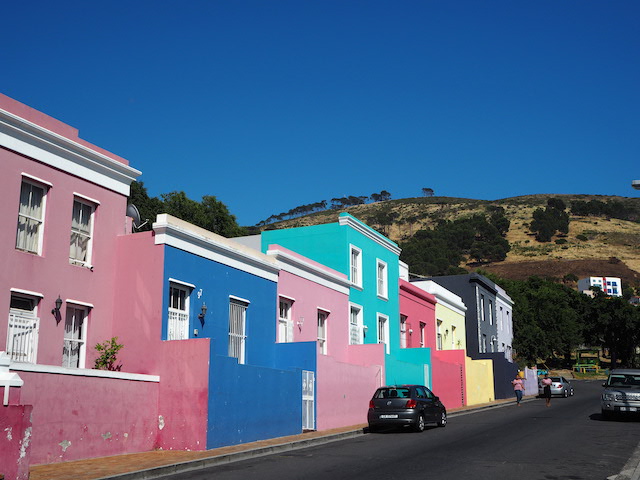
The Bo-Kaap has enjoyed attention in recent years for its colourful painted homes and views over the city. Gentrification has driven property prices up, altering the area’s character and making it difficult for longstanding residents to remain there. ‘Luxe’ Airbnbs and holiday rentals run by expatriate owners have become commonplace and sought after. But long before the YouTube vloggers descended, the Bo-Kaap was known as the Malay Quarter and houses South Africa’s first mosque, the Auwal Masjid, built in 1794 on land owned by a freed slave. The mosque’s first imam was a prince known as Tuan Guru, whose kramat can be found inside a cemetery in the Bo-Kaap. I knew Tuan Guru as the first imam of the mosque, a learned man who had written entire copies of the Quran from memory. I also knew that my own family had connections in the Bo-Kaap, that members of my mother’s family had been forced to move from areas within it that had been reclassified as for whites only. But what I did not know was that like the Prince of Madura, like Nelson Mandela hundreds of years after him, Tuan Guru too had been imprisoned on Robben Island for his political resistance against the VOC. It was during his thirteen years of imprisonment on the island that he had transcribed the entirety of the Quran, which can still be found in the Auwal Masjid today, if any of the vloggers care to look.
But was I really so different to them? I, too, paused in front of the cute pink houses for an Instagram-worthy snap, thinking only briefly of the people who had suffered there before moving on in search of my next shot.
IN THEIR YOUTH, my parents participated in the anti-apartheid movement, attending meetings and outlawed protests. From birth their lives had been prescribed by the apartheid regime, from the suburbs they could live in to the beaches they could swim at to the benches they could sit on; there was little it saw fit to leave unregulated. Both of their families had been forcibly relocated from District Six when it had been reclassified as a whites-only area. They attended Coloured schools, where they were taught by both white and Coloured teachers. At one of these schools, my teenaged mother challenged a teacher for making a racist comment and subsequently chose to leave the school when they backed the teacher instead. My father’s father was a Shaykh, his uncle an eminent Islamic scholar known across both the Cape and wider South Africa.
Theirs was a small, tight-knit community in which everyone knew everyone else. They had in-jokes and made darkly humorous attempts to cope with the difficulties of life. For example, when Prime Minister JBM Hertzog reneged on his promise to give Coloured people the vote in the 1930s, the Cape Malay community began to make the Hertzoggie – until this point an innocuous jam biscuit often consumed at Eid – with a two-sided brown and pink icing to reflect his duplicitousness. They married exclusively within the community or sometimes to those classified as Asian; to have relationships with a white person would have contravened a piece of legislation called the Immorality Act. In many homes people gathered regularly, particularly on Thursday nights ahead of the holy day of Friday, to make dhikr, melodic remembrances of Allah. These Thursday night gatherings were known as gadats and were typically accompanied by a cardamom-spiced milk drink known as gadatmelk (translated literally as ‘gadat milk’). It is said that the melodies of gadats were born from slavery, disguising religious practice as mere singing to the ears of their masters.
Together, the community formed its own religious institutions, issuing rulings on everything from Halal slaughter to the direction of prayer. As with any tight-knit community, there were intra-community disputes, factions supporting this Shaykh or another; petty squabbles and gossip and folklore abounded. So long as they were compliant and remained within the narrow boundaries apartheid confined them to, it almost felt like the community was its own self-governing entity, free to live and worship as it pleased.
For this reason, there were differences of opinion among Shaykhs on how to respond to life under apartheid. Some held that if their religious practice was not interfered with, agitating against the government was neither necessary nor desirable. ‘Keep your head down’ seemed to be a prevailing attitude. My parents did not ascribe to this view, but it was espoused by people close to them. It is of course impossible to know now how much of this response was grounded in fear. There was just cause to fear; the regime had proven itself capable not just of mass repression and mass violence, but also of very targeted and localised acts of brutality.
I first became aware of Imam Abdullah Haron after a visit to my maternal grandmother’s grave in Cape Town, the cemetery still and serene in the shadow of the mountain. My grandmother was buried alongside my grandfather, who had predeceased her by some forty years. I had known her as a kind woman who sent letters in immaculate cursive writing and sang ‘Happy birthday’ over the international telephone line. As I wandered through the gravestones, I saw a large grey one that immediately caught my attention, belonging to ‘Ash-Shaheed (“The Martyr”) Imam Abdullah Haron’, a man who had died in 1969. When I pointed out the gravestone to my parents, my mother recalled that as a child she had gone to Imam Haron’sfuneral, along with thousands of mourners. This was extraordinary even at the time, where funerals within the community were attended en masse by young and old alike. According to his gravestone, Imam Haron had been just forty-five when he died. My mother gently explained that the apartheid government had imprisoned, tortured and killed the imam, attributing his death to a fall down the stairs.
Curiously, Imam Haron was born in the same year as my grandmother. 1924 was significant to me for this personal reason, but there was another, more universal reason why it was significant. I had long known of it as the year Mustafa Kemal Ataturk, president of the newly established Turkish Republic, officially abolished the last Islamic caliphate, the shattered remnants of the Ottoman Empire. This abolition, while mourned by Muslims the world over as the end of a united, multiethnic Islamic political force, did not lessen the pull towards its spiritual heartlands. Just as Shaykh Yusuf had hundreds of years before, Imam Haron too travelled to Saudi Arabia in search of Islamic knowledge. The imam’s travels also exposed him to political and social movements such as the Muslim Brotherhood in Egypt. Soon after his return, Imam Haron was appointed the imam of the Al-Jamia mosque in Cape Town.
The mosque was to become a platform for disseminating the imam’s increasingly vocal anti-apartheid views, preaching about how all were equal before the eyes of Allah and inviting speakers from outside the community to speak to the congregation. But Imam Haron did not confine his activism to preaching from the minbar. Although Imam Haron’s activism was deeply grounded in his faith, he also began to connect with wider activist groups such as the Pan-African Congress, as well as crossing demarcated racial lines by making connections within Black townships. The 1960s also saw the imam personally affected by the Group Areas Act, which forced him and his family to move from their home in Lansdowne. In 1968, he travelled to Saudi Arabia and Egypt, meeting prominent government officials and exiled anti-apartheid activists. By this time Imam Haron was aware that his activities were being tracked by the apartheid regime, and he began making plans to emigrate. But it was too late. On 28 May 1969, he was taken into custody by the Security Branch. This was the beginning of 123 days of being held in solitary confinement. On 27 September, Imam Haron died, his broken ribs and bruises attributed to his supposed fall.
The following year, a sham inquest was held that attributed his death to that supposed ‘fall’ down the stairs. Imam Haron’s family fought for decades to have his death properly investigated, and just last year a new inquest was finally held by the Western Cape High Court. In October 2023, this inquest found what everyone had always known to be true: that the imam was a victim of torture and that the police and doctors had deliberately and callously lied about the cause of his death. The killing of the imam was then referred to the National Prosecuting Authority, but by this time the main members of the Security Branch involved had already been dead for many years, as was Imam Haron’s widow.
My parents recalled that on the evening of Imam Haron’s funeral, there was a huge earthquake. The tale sounded apocryphal, since South Africa is not known for frequent earthquakes, but it turned out to be absolutely true; it was in fact South Africa’s most destructive earthquake, resulting in twelve deaths.
In more recent years, they recalled another piece of information. Within my mother’s extended family was a shopkeeper whose customers included members of the Security Branch. While the imam was in custody, this policeman cruelly joked that that the imam liked to sing, and what they would do to him would really make him sing. To the policeman, it had sounded like singing, but the shopkeeper knew better. The imam had not been singing. He had been making the melodic chants of dhikr, calling to Allah.
I have no way of knowing whether this is apocryphal either, but the thought is comforting, that in his hour of greatest solitude and need the imam was not so alone after all.
IN MY DAYS of fervent idealism as a university student, colonialism and its impacts were constant preoccupations of mine. Visits to South Africa held renewed appeal; when we were there, instead of finding the people and places strange, I asked to visit kramats and tried to talk to my relatives about family history and the history of our people. Part of this interest arose from my formal studies of social theory and politics, but for me it was no mere intellectual exercise. Everywhere I looked, I saw its ongoing impacts, from the fragmentation of my cultural identity to the invasion of the land I lived on in Australia. As a practising Muslim, I also felt its impacts keenly and longed to redress them by creating a new framework through which to view the world. I began to study the form anti-colonial struggles assumed throughout the Muslim world, learning about Sufi warrior-imams such as Imam Shamil, who led resistance against the expansion of nineteenth-century imperial Russia into the Caucasus, and Emir Abd al-Qadir, who fought against the French colonial invasion in Algeria. I read about Malcolm X, read Muhammad Ali’s fiery speeches against the war in Vietnam. I saw an unbroken line between modern injustices and so-called ‘historical’ injustices, and once again I saw how Islamic beliefs and practice were integral to so many of these struggles, not just in South Africa but in every place Muslims were found.
It has now been over a decade since I’ve visited South Africa. I’ve wanted to go for so long, but something has always kept me away, whether money or distance or time. In that time, many of the people who could have shared tales of life under apartheid and intra-community squabbles and kramats have now died. I mourned their loss from afar with the peculiarly detached rituals of long-distance grief. But as with many youthful preoccupations, questions of identity and civilisational decline no longer burn with the same intensity they once did. I still keenly feel injustices inflicted by empire and supremacy, still see it as my duty as both a Muslim and a person of conscience to protest its many manifestations, whether that be the indiscriminate slaughter in Gaza or the incarceration of First Nations peoples. But I also have come to accept that I will probably never know precisely who I am or where my people came from, and that is okay too. I have a daughter now, and I will tell her what I know: that her people fought to preserve their faith so that she could know it also, that they fought for justice, and that I hope that someday she will carry on the fight too.
Image courtesy of Wikimedia Commons
Share article
About the author
Zeynab Gamieldien
Zeynab Gamieldien is a writer living on Bidjigal land. Her work has been shortlisted for the Rachel Funari Prize for Fiction and won the...
More from this edition
The window
FictionOne dinner, in the midst of playing with Seb in the reflection, Rudi laughing and squealing away, there came the distinct burst of a sob. We stopped in our tracks, looking around at each other in confusion until we located the downturned whimpering in Tim’s eyes and mouth. What is it? I asked, putting my hand on his shoulder. He turned and buried his face into my neck. What is it? I repeated. I don’t like them, he moaned, his hand pointing towards the window.

The power of a curse
Non-fiction IT WAS JANUARY 1995 when my father showed me how to lay a Gypsy curse. I had just published my first novel, Crazy Paving, and...
Girls to the front
Non-fictionIf there are no women in leadership in a synagogue, many of us don’t bother to come. Or if we do come, we know there’s no real point joining a board or committee – our opinions count for less. And this means that Orthodox Judaism risks losing a new generation of Orthodox women – women like me, who would never accept equivalent lack of opportunity and education in our professional and personal lives.
