
Featured in
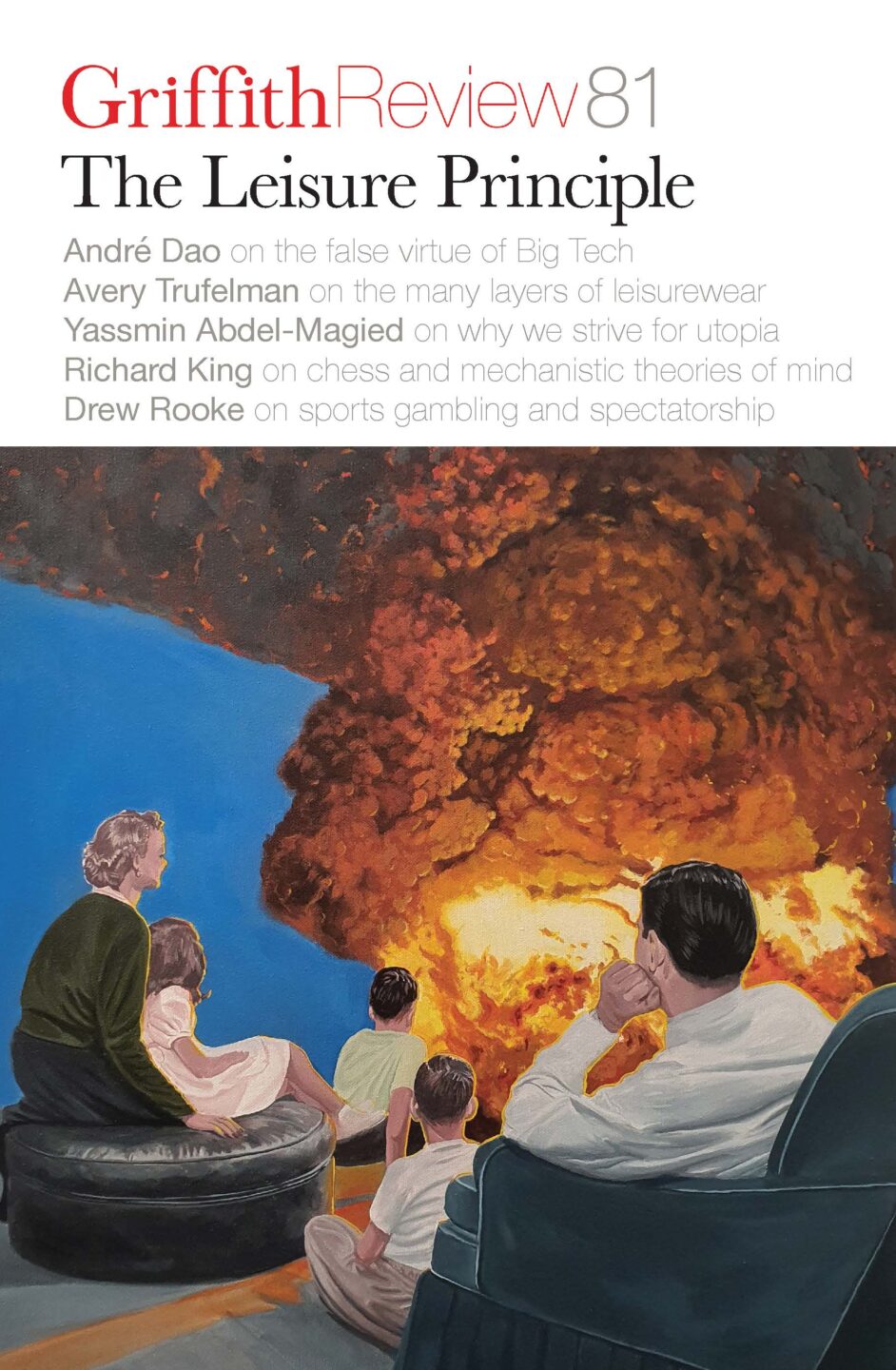
- Published 20230801
- ISBN: 978-1-922212-86-3
- Extent: 200pp
- Paperback (234 x 153mm), eBook

Already a subscriber? Sign in here
If you are an educator or student wishing to access content for study purposes please contact us at griffithreview@griffith.edu.au
Share article
About the author

Paula Bohince
Paula Bohince is the author of three collections of poetry. Her work has been published in Australian Book Review, The Australian, The New Yorker...
More from this edition

Revolutionary wave
Non-fictionThis was the late ’60s, early ’70s and surfing in Wales was regarded by the parent generation as delinquency. It was for losers, layabouts, rogue males. In those early days Welsh surfers numbered around one hundred, congregated on half a dozen beaches down fifteen miles of coastline west of Swansea, known as the Gower. I knew each one of those surfers by the styles they deployed on the waves. So idiosyncratic was early Welsh surfing that out on the road if you saw a car with boards on the roof coming at you, both drivers would pull over for a chat.

At the subway station
Poetry In a world of cunning shadesI’m the only sleuth. I hop on the train bound for a futureI’ve been hired to investigate. For a moment all...

Women’s work
Non-fictionIn the 1990s, increasing fiscal and social rationalisation shifted responsibility for leisure from the state to the individual and from the public to the private sphere. Leisure studies, with its emphasis on providing research and data to inform leisure quality, accessibility and access, was rationalised to enhance the ‘bottom line’ of universities that were now attuned to the pragmatic desires of industry sectors.
