
Featured in
- Published 20250204
- ISBN: 978-1-923213-04-3
- Extent: 196 pp
- Paperback, ebook. PDF
THE AUSTRALIAN HOUSING market is a wealth-generating machine, not a home-generating machine. So much is wrong with the current situation. No doubt you see it too; everybody seems to on some level. That’s why we keep hearing about the ‘Australian housing crisis’. I can see it, and I proudly consider myself an old-school capitalist, with a preference for free enterprise, fair competition, private property rights and the chance to make an occasional profit. We now find ourselves with a de facto caste system in Australia: the home owners relative to the home renters. Both groups need homes, but there is a marked wealth division between those collecting passive income on houses they own and those living solely on direct income who are forever chasing a rising market. Home owners benefit in myriad ways, with stability, equity capture, better credit conditions, investment opportunities and tax advantages. Renters get uncertain tenure, poor-quality management, pet restrictions and an impending sense of doom in the run-up to lease-renewal time.
Home ownership in Australia is a unique exception to tall poppy syndrome, the cultural checks-and-balances system designed to stop anyone from getting too big for their boots. Owning one house is lauded; owning more than one is held in near-mythical status. Success in the housing market may be demonstrated in the most vulgar of ways, and it’s socially approved of. Conversely, not owning a home diminishes your standing and potential. This is most keenly felt by the under-thirty-five cohort, among whom home ownership rates are plummeting. It’s getting worse year on year, and the future is looking grim: those who don’t already own their home are relentlessly overwhelmed by the gravity of the market as home prices increase more in weeks than incomes do in years. Rents are creeping up all the time as well. If you’re in on the dream, chances are you’re enjoying the uplift. If you’re not, you’re probably looking on desperately as the idea of owning your own home floats further beyond your reach.
Imagine the contemporary Australian housing market as a self-sustaining arena of desperation, competition and aggression. It’s like the analogy of crabs in a bucket. Some crabs manage to scramble to the top, away from the fierce contest. They can enjoy fresh air and sunlight while clinging to their patch of safety. They might be able to help others too, perhaps pulling up their lucky offspring. For any crab to make it to the top, they must overcome the many barriers created by both the contest and the other participants. In the Australian housing market, success in the form of home ownership at a price you can afford requires achievement, determination and good fortune. Unfortunately, every house bought comes at the cost of those who missed out, as they collectively watch their purchasing capacity ebb away month after month, year after year.
None of this seems in keeping with the Australian spirit nor the cultures or values of this place. It is not egalitarian or fair dinkum. House prices seemed crazy to me when I arrived here fifteen years ago, even off the back of the Celtic Tiger boom and bust back in my homeland. Since then, things have changed discernibly and disturbingly. Contemporary house prices are at ridiculous and potentially dangerous levels. Affordability is hard to find anywhere, even in far parts of regional Australia. It all feels so…unsustainable. There’s a collective sense that something needs to be done, that the future cannot continue to be devoured by the present. Perhaps we unconsciously understand that we have strayed into dangerous terrain. If we’re not careful from here, the costs may well escalate fast. They won’t just be economic; there will be plenty of social upheaval, including family break-ups, childlessness, poverty, homelessness, loneliness and despair.
If we are to consider possibilities for better alternatives and truly address the structural failures of the Australian housing market, we must understand the key factors that conditioned our current reality. It is also important to consider what all this really means for Australian society and its economy, and why it matters. Years ago, it was very fashionable to use the term ‘wicked problem’ in certain academic circles. It became trite over time, but it is worth dusting off here: the term describes a complex problem made up of numerous interconnecting strands. Wicked problems are near impossible to solve fully due to a lack of data, too many moving parts and the phenomenon where fixing one part of the issue causes others to misalign. The contemporary Australian property market is most certainly a wicked problem: an ugly, three-dimensional spatial render of direct policies, policy failures, aesthetic ignorance, absent imagination and craven money grabbing. It explicitly demonstrates an abject failure to appreciate the profound social implications of raising generations and expecting them to be invested in the future when they can clearly see that the current trajectory looks set to destroy any hope of their own home.
MAKE NO MISTAKE: the housing crisis is the most pressing national issue of our time. Its scale, impacts, implications and pace move it ahead of climate change, energy policy, international affairs and just about everything else. The reason for this is simple: not having a functioning housing market that provides accessible, stable and affordable accommodation is the hallmark of a developing country, not an advanced economy like Australia. We simply cannot regard ourselves as a serious player in the global order if we can’t house our citizens adequately.
Shelter is a foundation of Maslow’s hierarchy of needs. Individuals without access to safe and stable shelter will struggle to start families, build friendships and join communities. They will lack confidence, self-esteem and feelings of respect. Their potential for higher order things, such as creativity and self-expression, risks being crowded out by more basic and visceral needs. This interplay is not limited to the individual; it tends to play out across entire societies. In Modernization and Postmodernization, Ronald Inglehart offered a detailed theory of materialistic and postmaterialistic cultural and value orientations. Based upon studies conducted in forty-three societies, Inglehart argued that an individual’s value orientations have a direct influence on their cultural outlooks and perceptions as well as their society at large. Two main value positions exist: materialism (basic needs unmet, survival, hand-to-mouth living) and postmaterialism (basic needs met, security of home and society, altruism).
People’s desire for personal security is the major factor that shapes their value orientations. When this desire is widely satisfied, perceptions change and move from materialistic to postmaterialistic. This can happen at the scale of an entire society over time. Back when Inglehart was writing his theories in the late twentieth century, he probably had no reason to imagine the pattern would start to reverse only a few decades later in many developed countries. Yet here we are in Australia, an advanced and postmaterialistic society for the past thirty or so years, being dragged back to materialism. The anchor weight dragging us down is a distorted and inequitable housing market that has turned shelter and safety into tradeable investment commodities.
Australia currently looks about halfway through completing this regrettable U-turn, and it seems as though our policy-makers are fine with it. Those in power now are simply building on the legacy they have inherited. They manage the decline rather than arrest it. They largely represent embedded corporate interests rather than the interests of the people who voted for them. They like to talk and look like they care, as well as create the impression they are busy working on solutions, yet their actions rarely support their impassioned claims. Years upon years of poor and inadequate policy-making have exacerbated population growth and urban sprawl across the nation while suppressing income growth and opportunities for families or individuals to own their own home. The situation I described earlier, where those in on the dream are charmed while the rest are cursed, may not be explicitly intentional but is still an obvious and ongoing reality that has not changed across time or governments.
In truth, no side of politics really seems to care that much: the general sense emanating from the political arena is that access to housing is an individual’s own responsibility. It’s a classic play on the idea of there being no society, only economy. Nothing seems able to rouse them from their lethargy – not even the emergence of entire communities of tents in and around our major cities. Many of these are home to the working poor whose very dignity is daily affronted by the cold dispassion of most politicians.
Here is where we need to look hard at an uncomfortable but highly relevant truth: we cannot vote our way out of this mess. It should be clear to anyone with an inquiring mind that the major political parties are all deep in the property game. All of them love the bonanza tax boosts they get from property development and transfer as well as all the consumption taxes that follow. Rapid population growth through immigration turbocharges these revenues. Different political parties make sure to represent specific corporate interests. Put together, their collective policies are favourable to many of the big players in the property ecosystem: developers, the construction industry, unions, superannuation funds, big banks, large retailers, the media and more. Correspondingly we essentially have a uni-party system in Australia. The big two parties – ALP and the Liberals – are both warmly under the bedcovers with different stakeholders from the property industry. Vote for either party and be assured that house prices won’t come down. Be confident that while affordability will be a talking point, there’s no real chance of any politician meaningfully trying to deliver it. It’s the worst kind of cheap political trickery, where diverse election promises inevitably give way to business as usual. And forget it if you think the sideshow parties will help. They’re little more than the R2-D2 and C-3PO of Australian politics – occasionally helping to nudge the plot along, but mostly peripheral to the overall narrative.
To see the bait and switch in action, consider the Albanese government’s (self-described) ambitious housing reform program. This agenda includes a national target to build 1.2 million well-located homes as well as to facilitate rent-to-buy schemes, help-to-buy programs and a home guarantees scheme to assist people into home ownership. These reforms include the much-lauded Housing Australia Future Fund. Launched in 2023, the fund is intended to leverage $10 billion in dedicated funding to deliver on a commitment of 30,000 new social and affordable rental homes in the first five years. This all sounds impressive, and in some ways is, especially when compared to the relative inertia of various Liberal federal governments in the decade before. Yet for all the promises, any real contributions of the Albanese government’s reform agenda are being erased in real time by historically high rates of inward immigration overseen by the very same government. Treasury figures on recent migration rates and projections show a record net overseas migration intake of 528,000 in the 2022–23 financial year, with 395,000 predicted for 2023–24 and 260,000 in 2024–25. In other words, those three years of population growth through migration will account for almost all 1.2 million new houses – assuming they are built. In the interim, record migration patterns are adding even more pressure to an under-supplied market, with predictable and chaotic consequences for prices and affordability. Around and around the political wheel goes, with no real regard for the profound macro-impacts of this failure to accept basic mathematics and economics.
IN A WORLD of abstractions, distractions and contestations, there remain some universal and undeniable realities. None are more certain than supply and demand. This interrelationship is fundamental, simple and cold. Too much supply of anything dampens demand and lowers the price of exchange. Too little supply conversely increases demand and increases prices. We may abstract, interpret or argue about the character and nature of the turbocharged Australian housing market, but the fundamental reality remains a story of unreconciled supply and demand. In this case, demand is consistently -outpacing supply, leading to rapidly escalating prices.
That’s not to say that we aren’t busy bringing new supply to market. On the contrary, we build quite a lot of housing. Recent figures indicate that new housing starts peaked at around 220,000 per year in 2016 but have since decreased, with figures around 150,000 to 180,000 in the 2020s. That’s still a lot of housing, and even though volume has not kept pace with population growth, it wasn’t too far off until the last year or two. However, it’s not quite as simple as matching housing supply with population. There’s also the matter of people’s tastes, desires and preferences. Most of us are very careful with large purchasing decisions. Housing is no different, meaning the properties that better meet people’s tastes and desires will attract a premium, even in a well-supplied market.
Increased urbanisation and population growth have led to a growing preference for apartments and townhouses. These are popular with younger people, downsizers and those seeking proximity to diverse employment opportunities, amenities and night-time economies. The rising cost of land and construction in urban centres has made detached homes less affordable for many buyers, leading to a shift towards higher density housing options. A great deal of recent new supply into the market has come from apartments and townhouses. Together these represent a significant portion of new housing construction, accounting for around 30–40 per cent of new -dwellings in major metropolitan areas.
Urban density can be a great thing and can be delivered in successful and desirable ways. Think of some of the great cities of Europe (Madrid, Amsterdam, London), the historical East Coast cities of the US (Boston, New York, Washington, DC) and contemporary world-standard examples such as Singapore. It is possible to combine density with aesthetics, liveability, beauty, convenience, walkability, health and proximity. Unfortunately, we are generally poor at achieving such good outcomes when we try to supply dense housing in Australia. Many of our new inner-urban neighbourhoods lack character, identity and a sense of place. They feel like new urbanism designed by AI, with limited design flair or understanding of human movement, scale or experience. These areas are rarely vibrant or familiar. Many are characterised by monotonous, towering buildings that block the sunlight, leading to cold, dreary and unwelcoming streetscapes. Children are often notably absent. Even families who might want to live in these areas are put off by poor walkability, fears about child safety and limited school choices. Despite years of urban densification, many remain unconvinced of the merits of choosing that type of housing and associated lifestyles.
Despite a shift towards inner-urban, higher density living for some, preferences for detached homes remain dominant for most. Single-family detached homes in suburban and peri-urban areas have historically been the preferred housing type in Australia. This deep cultural preference has held for over a century, fundamentally shaping the historical development patterns of Australian cities. This legacy continues, reflected in the bulk of new supply being delivered in the form of single-family detached suburban homes, albeit often on tiny blocks in urban fringe areas. Meanwhile, the true bluebloods of the Australian property market – the middle-ring suburbs built in the decades after World War II – reign supreme. Age is no barrier to this stock, with plenty of buyers willing to pay a premium for older houses because they come with established communities, greenery, space, amenities and services – not to mention the potential for extensive renovations and extensions.
So, while we are supplying a decent volume of new houses annually, we are under-supplying the types of stock most people want. It could be argued that many years of urban consolidation policies have led to an oversupply of apartments and townhouses in inner-urban locations. Consequently, many buyers and renters are increasingly forced to make hard choices. For those preferencing the suburban life, it may mean an overpriced and poorly built detached house on 350-square metres that is located fifty kilometres from the city, requiring hours of daily commuting. For some that’s a better choice than inner-city density and anonymity. Those who choose apartment or townhouse life get less floor space and less commuting, but almost certainly still need to keep a car and will have to use it more than they expected.
In short, our best efforts to increase densities and prioritise inner-city living have not improved access to housing overall or moderated prices. We’re maxed out on density but still have a housing crisis. Perhaps the focus from here on would be better placed on what type of housing and neighbourhoods we’re supplying, especially with many people’s expectations not being met by current supply strategies. Hard questions and difficult truths must be confronted. We could solve our housing crisis, deliver enough stock and moderate prices if Australians wanted to live like our neighbours in Asia, but most don’t. Pretending this is not the case is not a sustainable strategy into the future.
HOW DOES THE current market madness tally with notions of urban sustainability? It’s a tricky question and very open to interpretation. The concept of sustainability has three dimensions: social, economic and environmental. The Australian housing market bumps up against all three. Looking at it in a very broad way, it is clear that the current situation is not sustainable. Rapid population growth through migration, intrinsically linked to rampant house-price inflation, has profound and severe effects on many people. It is leading to rising economic inequality, social division, environmental problems and falling birthrates. Our cities and metropolitan areas creep further outward, gobbling up more land relentlessly. There is endless demand for energy and imported construction materials. More traffic on roads, and more infrastructure required to support it all. Despite many determined efforts, there is limited success with getting people out of cars. Public transport rarely keeps up with growth and there’s no real uptick in cycling. Many people are daily asked to pay more for less, to substitute community for commuting, to moderate their dreams, put family on pause and on and on. None of this is in the least bit sustainable.
Our current calamity isn’t just diminishing our sustainability aspirations now but will crush them into the future. My PhD supervisor, Brendan Gleeson, wrote several well-received articles (including in Griffith Review 29: Prosper or Perish) about waking from the Australian suburban dream. He argued that the profound impacts of climate change would soon put a sharp stop to the Australian urban growth machine. This would force us to wake up from the slumber of comfortable, suburban consumption and signify that our ecological debt was due. It’s a compelling argument, but now we can see the plot twist with the benefit of hindsight. Climate change may yet come calling, rouse us and demand its due. But we are already waking from the comfortable dream of years past. Australia’s sleepy suburbs are urgently stirred by the alarms of affordability, access and basic human dignity. The chaos of an out-of-control housing market overwhelms us already. It is a problem for today and it threatens our present and future. If we cannot provide current and future generations with reasonable access to housing, then we cannot expect them to care about less immediate imperatives such as sustainability and climate change. Instead, they will be much more focused on the inherent unsustainability of their lives as the idea of owning even the most basic home becomes a waking nightmare.
CHANGING THE TRAJECTORY of the Australian housing market is not a straightforward or quick task. Politics is only partly responsible for this mess; at best it has a partial role in sorting out the dilemma. Corporate parasitism and vulture capitalism are active forces that will always represent a profit fundamental, but that’s not unique to Australia. The simple reality is that the structural failures of our housing market, while devastatingly costly for some, are handsomely rewarding for others. Many large and powerful forces will actively resist change any way they can. Their short-term motivations outweigh their concern for future generations or anyone outside their social sphere.
We should all ask ourselves if it’s worth it. Is equity inflation, shareholder satisfaction, negative gearing and leverage for some worth the very real and genuine suffering of so many? When you say you want the housing market to be fixed, what do you really want, for whom and why? What are you prepared to do, to contribute or to sacrifice to facilitate positive change? It’s important to know where you personally are coming from. There’s more scope for action that way. As I mentioned earlier, I’m an old-school capitalist and I regard enterprise, competition, private property rights and profit-making as central to a decent society. My true preference is for social and market fairness. The chance to secure a home should be widely available and not the preserve of a social and economic elite. If the latter is the case, then we are going backward as a country and a society. Left unchecked, I see market failures leading to profound social upheaval in Australia. You can’t have a functional society with a dysfunctional housing market over the long term.
The housing crisis is the most urgent of our big, national challenges and we can only fix it by looking forward, past ourselves, past the short-term motivations of today. It affects all of us every day. This is an intergenerational dilemma, with major implications for current and future generations of Australians. If ownership cannot be on the cards for all, then secure rental tenure at least should be. Changes will need to be made today to safeguard tomorrow. It is in all our interests to moderate the course of the Australian housing market before it goes any further off the tracks and drags the economy and society further down with it.
I would suggest starting a new national conversation about how home ownership fits in with our current cultural aspirations towards fairness and the future. This can set the context for action. Similar things have happened before and offer some precedence, most notably the co-ordinated national housing and population programs rolled out after World War II. They were carefully agreed and managed across states to ensure ample supply so new and existing residents could have access to decent and affordable housing. The lessons of the past may serve us well if we truly are serious about taking the heat out of the current housing crisis. It is high time the Australian housing market returned to being a home-generating machine and the bedrock of an advanced, fair-go society.
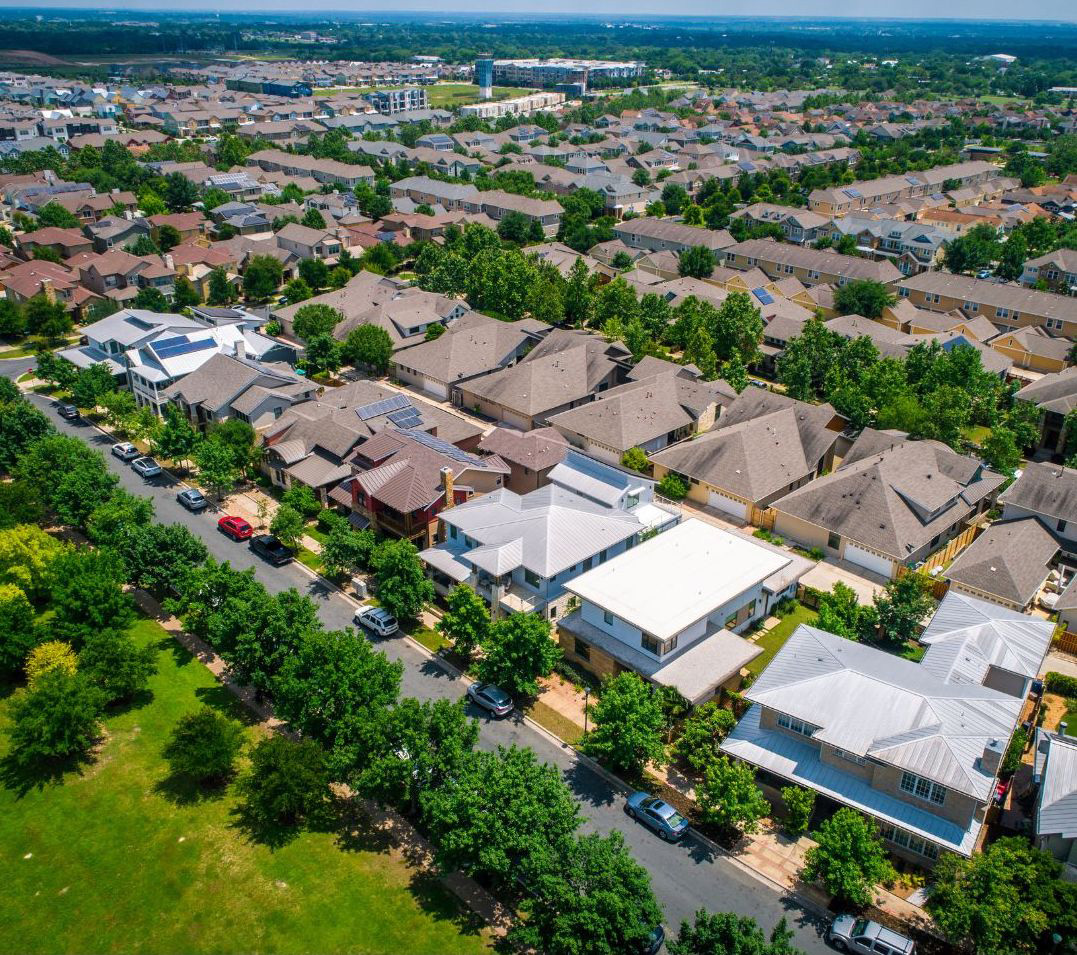
Image by RoschetzkylstockPhoto via Canva.com
Share article
About the author

Tony Matthews
Tony Matthews is an urban planner, scholar and international advocate for good cities. His award-winning work addresses current and emerging urban challenges through research,...
More from this edition

Bellend
Poetry ‘Nice little bell, buddy,’ snipes some guy holding space in the bike lane as I nearly swipe him on my way to the shops. Low and...
Follow the road to the yellow house
Non-fictionI first visited Varuna in 1994. I had just left my job as the Aboriginal Curator at the Australian National Maritime Museum, where I was involved in establishing the first gallery dedicated to addressing Aboriginal and Torres Strait Islander maritime history. I remember that visit well – even then I felt at home. I grew up in the Blue Mountains. My parents bought our family home there in the early 1970s. It was built in the 1940s, which means that it has a similar interior to Varuna, with ornate cornices, creamy white bathroom tiles, a green basin and bath, Bakelite door handles and even an old black phone.

Painting behind bars
In ConversationEvery time I grab a toothbrush, it makes me smile that [this all began] at Manus. I mean, this technique comes from suffering. This is not from university. I am forbidden from studying or getting a qualification here, but sometimes we can learn from suffering. I am managing to heal my trauma [with] painting. Whenever I feel sad, I paint. Whenever I feel happy, I paint. It’s like a treasure, how can I explain it? It’s invention, it’s something that hasn’t happened before. Everyone uses a toothbrush, but when I paint with a toothbrush I feel it helps me understand that my work, the marks I make, are very unique. It brings the story back. I don’t want people to forget about the story because I don’t want to escape from who I was, who I am. I would like to share the truth that this happened to me.
