
Dressed for success
Beneath the layers of business casual
Featured in

- Published 20230801
- ISBN: 978-1-922212-86-3
- Extent: 200pp
- Paperback (234 x 153mm), eBook

Already a subscriber? Sign in here
If you are an educator or student wishing to access content for study purposes please contact us at griffithreview@griffith.edu.au
Share article
About the author

Avery Trufelman
Avery Trufelman is a podcaster and radio producer based in New York. She presents the podcast Articles of Interest andis the former producer of...
More from this edition

Lying on grass
FictionJamie wishes he could be more like Todd. Not because Todd’s excellent, but because he figures out what he wants and does it. As they pull out bits and pieces from the skip to build their drum sets, Jamie thinks about how he wants to be free, but doesn’t know if that’s something a person can ‘do’. After a while they’ve constructed two sets side by side at the front of the driveway. They’re not buckets, tins or lids: they’re tom drums, snare drums and cymbals.
We will never be modern
Non-fictionMy Instagram feed, an information-stream cosplaying as a hyper-relevant town square, has undergone a radical transformation in the past few years. Whereas once that endless deluge teemed with benign yet revealing snapshots of friends moving through the motions and milestones of life – brunches, holidays, weddings and pregnancies – today’s experience is far removed.
The defence
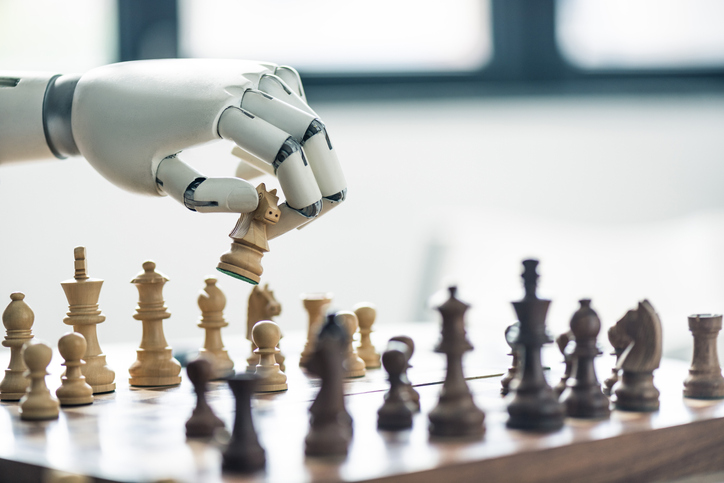
Non-fictionThe history of computer science is bound up with the game of chess, whose innate complexity and clearly defined rules make it the ideal proving ground for artificial intelligence. And yet the game not only survived the defeat of Garry Kasparov in 1997 by IBM’s supercomputer Deep Blue, but also seemed to flourish in its wake. According to International Chess Federation figures, more people are playing the game than ever before, and not merely over the internet. Now, as a new generation of AIs aces the Turing test – according to which a machine may be deemed intelligent if the human interacting with it can’t tell if it is a machine or not – it might be worth taking a closer look at chess as a social and creative phenomenon that speaks to the limits of ‘smart’ machines.
