
Featured in
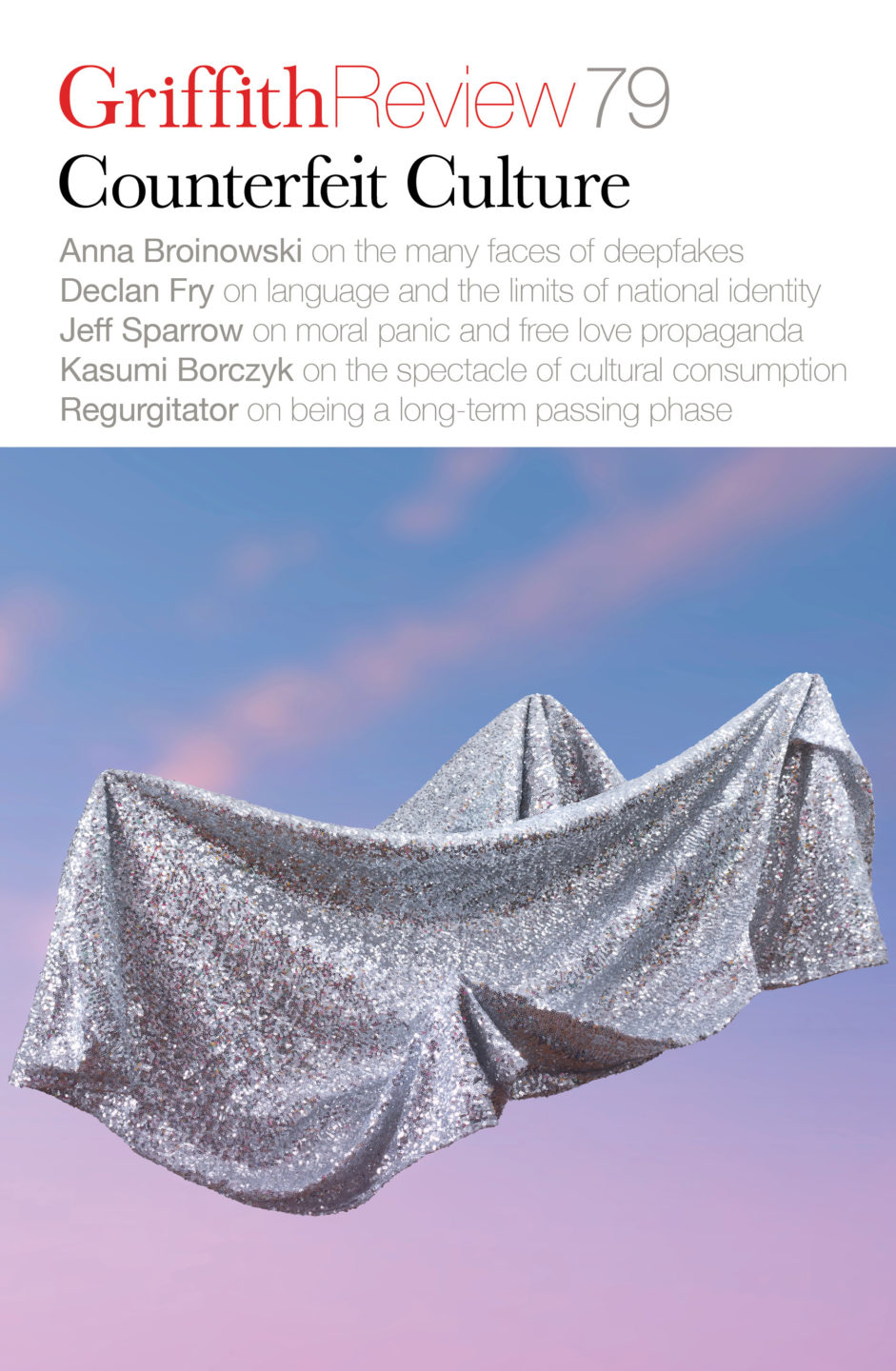
- Published 20230207
- ISBN: 978-1-922212-80-1
- Extent: 264pp
- Paperback (234 x 153mm), eBook
THINK BACK TO when you were a kid and of all the things you believed in that turned out not to be true: Santa Claus. Unicorns. Your parents’ infallibility. The concept of fairness. Bill Murray. These unmaskings may, in some cases, have been sudden and shocking; in others, the dawning of truth may have been more gradual, your naïveté slowly disappearing beneath the ineluctable horizon of maturity and cynicism.
As we grow older and the make-believe fables and protections of childhood fall away, we’re often expected to understand the difference between what’s real and what’s not – it’s simply part of how we must navigate the world as adults. But quite aside from the vexed circumstances of being alive in the twenty-first century – a time of relentless counterfeit both online and off, from filters and fillers to influencers and identity fraud – our very existence as humans who must coexist with other humans necessitates a constant and complicated process of distinguishing the authentic from the artificial. It’s never easy – even when you’ve known for decades that Santa isn’t real.
In her book Authenticity, writer Alice Sherwood observes that the very word ‘authenticity’ now has dual meanings that are ‘almost completely opposite’. There’s the original meaning – the objective notion of whether something is a fact, a verifiable claim. And there’s a more recent meaning that’s altogether more nebulous – what Sherwood calls ‘personal authenticity’, or ‘being true…to your own, internal sense of self’, ‘looking to feelings rather than facts’.
These competing, sometimes contradictory, concepts can create a circle that’s difficult to square. So perhaps the question we should be asking isn’t about whether something is real but about how we’re defining – and
redefining – the terms of that reality and the values we ascribe to it.
COUNTERFEIT CULTURE NAVIGATES this maze of modern deception with a compelling and wide-ranging collection of nonfiction, fiction, poetry and visual essay. The pieces in this edition mine the social, cultural and emotional ramifications of our shifting relationship with reality: the power of deepfakes, the possibilities of AI-generated art, the changing face of cosmetic surgery, the performance of pornographic pleasure, the dangers of corporate greenwashing, the allure of conspiracy, the bureaucratisation of art, the psychic release of fake news, the limits of national identity, the stigma of selling out, the complexities of gender transitioning and much more. This edition’s short fiction offerings include an unsettling trip to a strange town, a macabre memorialisation of a beloved family pet and the outlandish escapades of a psychic shaman oracle medium visionary prophet saint. Counterfeit Culture won’t deceive you (at least not intentionally), but it’s sure to entertain you – and perhaps you’ll think about it the next time you find yourself unsure whether what you’re reading, seeing or hearing is, in fact, fake.
I’d like to thank the Copyright Agency Cultural Fund for their generous support of our Emerging Voices competition – one of our five winning entries from 2022, Alex Philp’s ‘Taxidermy’, appears in this collection. You can enjoy the final two winning pieces from last year’s competition in our next edition, Griffith Review 80: Creation Stories.
I hope you enjoy reading this collection as much as the Griffith Review team enjoyed working on it. Just like Coca-Cola, it’s the real thing.
28 November 2022
Image credit: Getty Images
Share article
More from author

Bill’s secrets
GR OnlineJanet was about to discover that Bill was born into a Welsh coal-mining family, most of whom were still alive when she married him – including his mother, living in the Probert family house in Ynyshir. Ynyshir, we learn, is in the Rhondda Fach, South Wales. Apparently Roy simply disappeared from their life at the end of the Second World War.
More from this edition
The future is hackable
Non-fictionDeepfakes point to a future that is simultaneously euphoric and apocalyptic: philosophers have positioned them as ‘an epistemic threat to democracy’, journalists have called them ‘the place where truth goes to die’, futurists have portrayed them as the digital harbinger of a mass ‘reality apathy’ in which even video will be a lie.

About face
Non-fictionOur image-centred world has elevated what writer Jia Tolentino calls ‘Instagram face’, a racially ambiguous assemblage of ethnic ‘greatest hits’ – wide cat-like eyes, big lips, smallish nose, high cheekbones. Few people will have a face that fits this template... But, whatever, you can pay for it.
Dot and Ern
Poetry Like the hawk of fabric shears, cockatoo calls cut raucous through sheets of...
