
Featured in
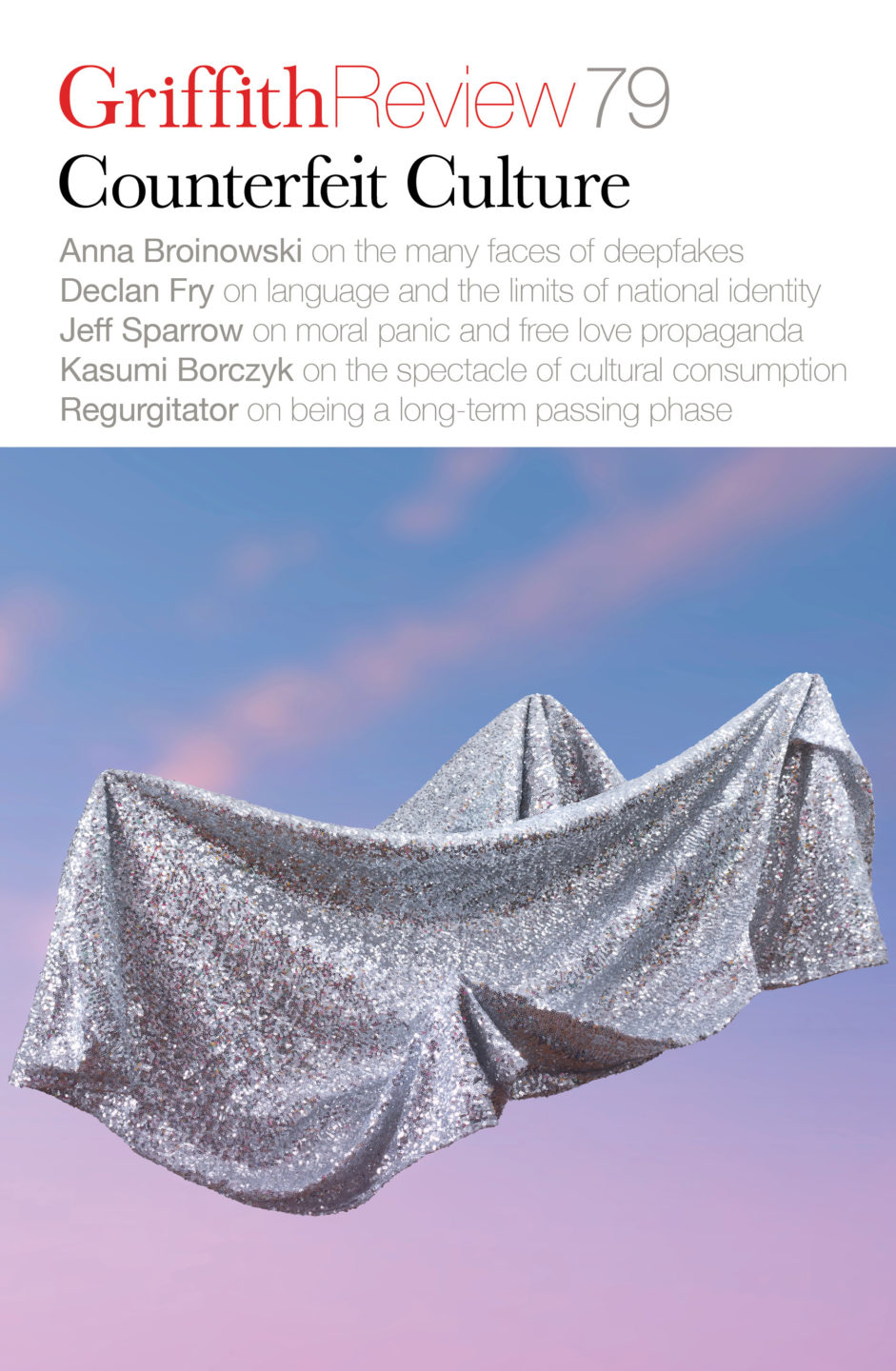
- Published 20230207
- ISBN: 978-1-922212-80-1
- Extent: 264pp
- Paperback (234 x 153mm), eBook

Already a subscriber? Sign in here
If you are an educator or student wishing to access content for study purposes please contact us at griffithreview@griffith.edu.au
Share article
More from author
The great divide
In ConversationIn the ’80s, and maybe the early ’90s, fashion was a political statement just like art was…and real art wasn’t about selling out or succeeding in a mainstream context; it was the opposite. The whole idea was that you didn’t want to conform. Anyone who was trying to make money off your art or helping you make money was corrupt or compromised. The last thing you did as an artist or a writer in the ’80s was self-publicise – it was so naff, it wasn’t done. Street cred was what mattered. And I’ve been watching, with social media and the internet, this 180-degree shift over the last few decades.
More from this edition

Lesbian search terms
Poetry how does a lesbian love a person can I use a rock to tenderise meat Amazon commercial with the lesbian couple wtf homemade real lesbian things that usually don’t go together but end...
Self-portrait in Joy Hester pocket mirror
Poetry All hail my inner bones, things have been troped yet now heat up. Being Bowie gone to Berlin, genuinely out of ideas and summoning Brian Eno wearing...

From Russia with love
Non-fictionThe 'socialisation of women' narrative arose from journalistic innovations associated with the First World War. In response to an unprecedented demand for up-to-date news, the Australian press had embarked on rapid technological change. Editors installed steam- and rotary-powered printing machines, established distribution fleets of automobiles and trucks, and hooked up their newsrooms to telephone lines.
