
Featured in
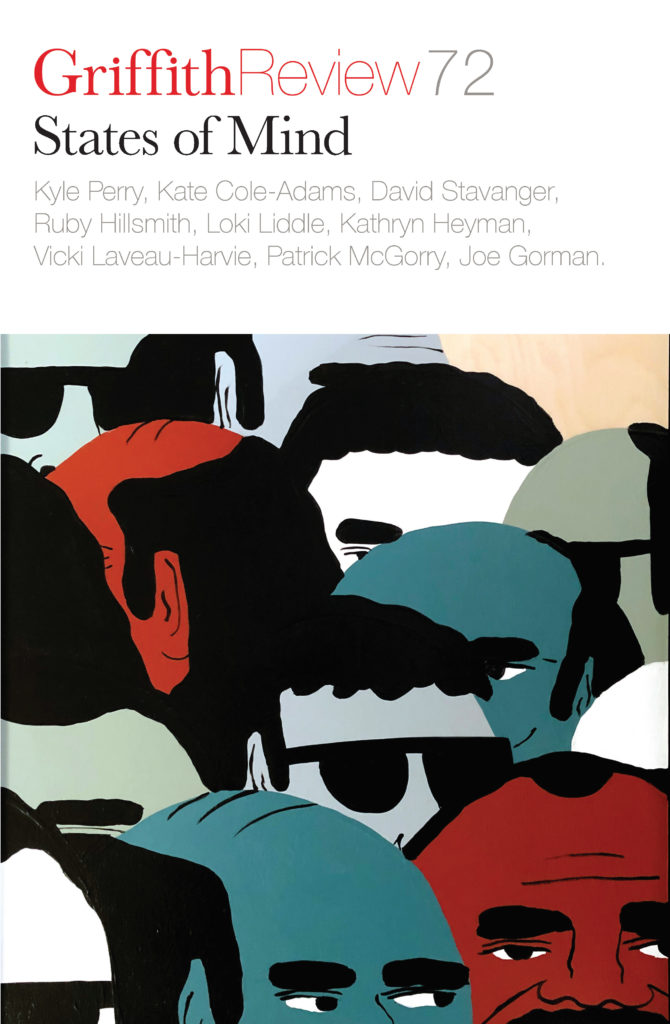
- Published 20210504
- ISBN: 978-1-922212-59-7
- Extent: 264pp
- Paperback (234 x 153mm), eBook

Already a subscriber? Sign in here
If you are an educator or student wishing to access content for study purposes please contact us at griffithreview@griffith.edu.au
Share article
More from author
Finding the right phenotype
I paused to consider the possible benefits of a diagnosis. If I was autistic, my disinclination towards hugging, eye contact and small talk would stop being seen as a sign of my underlying coldness and instead be considered a legitimate accessibility need. I imagined a whole new world where the federal Disability Discrimination Act (1992) would be my shield, protecting me from the scourge of ‘camera-on’ Teams meetings. Could I insist on my own four-walled office at work, and get out of the cacophony of the modern open-plan office too? Maybe my new condition could even explain away my patchy work record and reluctance to accept underwhelming authority figures.
But I already had a label. One that, like autism, regularly stirred up moral panic around wokeness and social contagion. As a recently diagnosed transgender person, I was already part of a highly online, over-educated and underemployed cohort, routinely blamed for stifling free speech as well as both maintaining the gender binary and destroying it. The alt-right discourse was already aflame, decrying the social scourge of everyone wanting to be seen as a ‘special snowflake’ and the creeping ‘politics of victimhood’. Did I really need to inhabit a second suspect identity?
More from this edition
This Her Thing
MemoirI DRIVE PAST where Mum died and I feel the tractor beam of that place, the urge to pull in and stop. But I...
Unease and disease
EssayOVER THE COURSE of eight years I researched and wrote a book, Bedlam at Botany Bay, about colonial madness in Australia. I read the records...
Le Méridien
Poetry8 a.m. poolside, two women rolling cigarettes like a production line. This hotel full of Russians with grapefruit-hard stomachs and bar tabs the length of my tax return. Impossible...
