
Featured in

- Published 20240806
- ISBN: 978-1-922212-98-6
- Extent: 216pp
- Paperback, ePUB, PDF

Already a subscriber? Sign in here
If you are an educator or student wishing to access content for study purposes please contact us at griffithreview@griffith.edu.au
Share article
More from author

War of words
GR OnlineDuring my first news break at 6.30 am, I read the news reports about Israeli airstrikes out verbatim. But as I spoke into the mic, I felt unsettled by what I was saying. I had naively thought that this kind of bare-bones style of ‘raw’ AAP reportage is simply factual, and free from linguistic sleights of hand. But of course, I was wrong.
More from this edition
Put your house in order
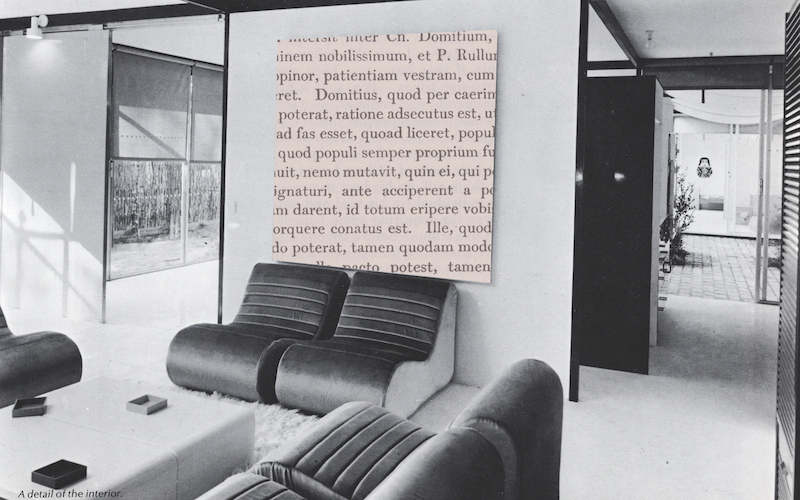
In Conversation Poet, performer and musician Pascalle Burton has always been compelled by the visual possibilities of language and the imaginative dynamism of collage. Her multimodal...
Into the void
Non-fictionThe singular achievement of mass politics was allowing otherwise powerless individuals a greater say in how society was ruled. It gave ordinary people the kind of status that hitherto they could hardly imagine. Its withering away, therefore, has allowed those in society whose status has always been higher to assert their interests more fully. Business and the wealthy are no longer forced to make big compromises to accommodate the interests of those below them in the social pecking order. For example, trade and financial liberalisation policies have permitted many companies to shift production, and even some services, offshore to capitalise on lower labour costs, weakening unions’ bargaining power considerably. Many lower paid workers have been pushed into insecure, low-paid jobs with poor conditions, a transformation justified by political and economic elites as contributing to greater economic ‘efficiency’ and labour market ‘flexibility’. Owners thus pocket a greater share of the economic pie, while workers’ incomes often stagnate or even decline in real terms, causing wealth inequality to rise steeply...

The great divide
In ConversationIn the ’80s, and maybe the early ’90s, fashion was a political statement just like art was…and real art wasn’t about selling out or succeeding in a mainstream context; it was the opposite. The whole idea was that you didn’t want to conform. Anyone who was trying to make money off your art or helping you make money was corrupt or compromised. The last thing you did as an artist or a writer in the ’80s was self-publicise – it was so naff, it wasn’t done. Street cred was what mattered. And I’ve been watching, with social media and the internet, this 180-degree shift over the last few decades.
