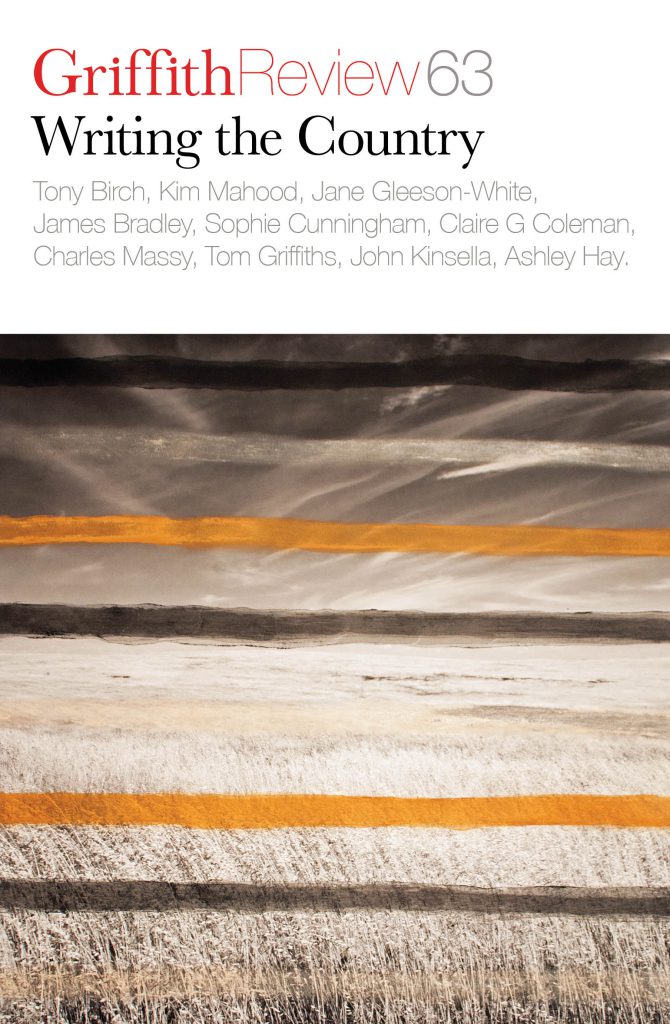
Life and death on Dyarubbin

Reports from the Hawkesbury River

Featured in

  • Published 20190205
  • ISBN: 9781925773408
  • Extent: 264pp
  • Paperback (234 x 153mm), eBook

ON THE RIVERBANK at the old Sackville Aboriginal Reserve on Dyarubbin there’s a stone obelisk. It seems permanent and solid, but it has a habit of slipping out of landscape and memory. Erected in 1952, the obelisk was later swallowed whole by lantana, and when found again during a clean-up in the 1970s, nobody could recall anything about it.[i] There is a sense of quiet reverence to it – this tall, solitary monument dark with age, like a gravestone. But perhaps more striking is the fantastical old fig tree nearby, its interwoven roots wrapped over a massive rectangular rock.

I am here on the river with Darug descendants Leanne Watson, Erin Wilkins and Jasmine Seymour, as well as historian and archaeologist Paul Irish. It’s autumn, the season of mirror-still water and pure-white morning fogs that burn off gradually to shreds and wisps. We are on our first field trip for the project The Real Secret River: Dyarubbin, launched in 2017 and inspired by a precious find in the Mitchell Library – a list, neatly handwritten, of more than 170 Aboriginal names for places on the Hawkesbury River. These words were given to a scientifically minded Presbyterian minister, the Reverend John McGarvie, by the Aboriginal people of Dyarubbin in 1829.[ii] McGarvie helpfully linked the Aboriginal words with the names of the settlers’ farms too. This means, stunningly, that it is possible to pin at least some of these words back to their river places. It means that these places might be known once more by their soft, rolling Aboriginal names, that the words might again be spoken as part of living language and shared geographies. And then, what if we think of these names and places as portals to the larger Aboriginal world of Dyarubbin? What if they could also be reconnected with Aboriginal traditional knowledge and language, and with history, archaeology, geography and ecology – read together through the prism of the river?

Already a subscriber? Sign in here

If you are an educator or student wishing to access content for study purposes please contact us at griffithreview@griffith.edu.au

Share article

About the author
Grace Karskens

Grace Karskens is Professor of History at the University of New South Wales.  Her book The Colony: A History of Early Sydney won the...

More from this edition
Transforming landscapes

EssayI stood rooted to the ground, for I realised this almost certainly would have been the first time in 150 years of degrading European management that a reed-warbler had returned to this valley. The powerful song of that small bird became a metaphor of hope for me. It was a symbol of the power of regeneration and the capacity of self-organisation in a landscape. It was a living example of what could be achieved.

could be

Media                     (Callerya megasperma family Fabaceae. Native wisteria.) Australian-style mimesis is native daphne, frangipani, gardenia, violet … Is Callerya megasperma, native wisteria. Is the megasperma, the big...

On suicide watch?

IntroductionTHE WORLD IS full of beautiful places. Beaches and oceans, cliffs, forests, mountains and valleys, deserts, rivers, islands, harbours and bays. Places where the...

Stay up to date with the latest, news, articles and special offers from Griffith Review.