
Featured in
- Published 20240806
- ISBN: 978-1-922212-98-6
- Extent: 216pp
- Paperback, ePUB, PDF
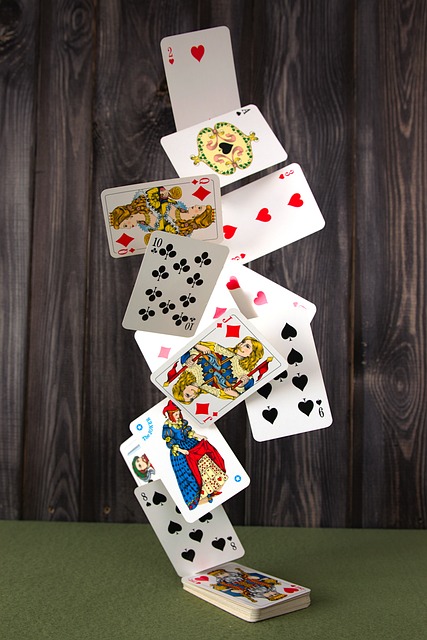
THINKING ABOUT STATUS reminds me of that faintly threatening riddle about the future: I am always in front of you, but you will never see me. Status itself is a little like a riddle: a code to be cracked, a hand in which you can’t see all the cards. Unless you’re Batman, however, the stakes for solving riddles tend to be comfortingly low, whereas the pressures of deciphering status can occupy a far more consequential role in our lives (it’s all fun and games until somebody loses their cultural capital). It’s also easiest to define status according to what it isn’t: gender, race, class, job, accent or postcode, although all these elements circulate in its DNA.
This shapeshifting quality is surely why status today increasingly seems the wrong way around, or like the punchline to a bad joke: the well-off dress down (but at high prices), the political right is winning the working-class vote, the left is charged with intellectual and cultural elitism, buying a one-bedroom flat is a sign of intergenerational wealth, and having zero free time is now a curious way to win prestige – the rich and important are idle no more. Then there are the insidious ways in which status, like an invisible yet insistent hand at the small of your back, pushes you into or away from particular social and professional circles where seemingly innocent questions – about what you do, where you’re really from and where you went to school – cast looming shadow puppets of double meaning.
Status isn’t always negative, of course. Accrue the right kind, and its gifts can be manifold. Would it be any easier to parse if we could say the quiet parts out loud – if we could just ask and answer the question so memorably put by the Spice Girls back in 1996: who do you think you are?
THIS EDITION OF Griffith Review is unlikely to resolve your status anxiety, if you’re so afflicted. But its essays, short fiction, conversations, poems and visual art seek to make status and its attendant frustrations, iniquities and (occasional) pleasures a little more visible. It surveys the ways in which status plays out socially, environmentally and institutionally: the end of mass politics (and what might come next), the inversion of class markers, the existential and practical consequences of climate inaction, the problems plaguing the tertiary sector, the medical industry’s specialisation conundrum, and what Australia’s short-lived obsession with a nineteenth-century bush poet can tell us about today’s literary infrastructure (a lot). It also gets personal, laying bare the emotional tripwires of family relationships, the anxieties of identity markers, and what it really feels like to have someone write a hatchet-job review of your first novel (not great).
Thank you, once again, to the Copyright Agency Cultural Fund for their generous support of Griffith Review’s Emerging Voices competition. We’re thrilled to be publishing Alex Cothren’s ‘The Juansons’, one of the winning 2023 stories, in Status Anxiety. Thanks also to Arts Queensland for their generous support of two essays in this edition, Bebe Oliver’s ‘Birthmarks’ and Beau Windon’s ‘Drowning in a puddle’, through the Queensland Arts Showcase Program.
What fresh, and freshly confounding, guises will status adopt in the coming years? It’s anyone’s guess – we can’t see the future, even though it’s always in front of us. I suspect the best we can hope for is that we’ll still be here; that some tech bro in designer leisurewear won’t have decided to colonise Mars en route to hacking his own immortality; and that we’ll have discovered some kinder, less confusing ways to figure out where we fit in all the actual and imagined hierarchies that populate our lives.
Those are my wishes, anyway. And I like to think they matter. Because, well…don’t you know who I am?
June 2024
Image courtesy of Pixabay
Share article
More from author
Bill’s secrets
GR OnlineJanet was about to discover that Bill was born into a Welsh coal-mining family, most of whom were still alive when she married him – including his mother, living in the Probert family house in Ynyshir. Ynyshir, we learn, is in the Rhondda Fach, South Wales. Apparently Roy simply disappeared from their life at the end of the Second World War.
More from this edition

Dying of exposure
Non-fictionPublishing is a weird industry, a retail supply service where every day hundreds – thousands – of brand-new, untested products are launched, each one a little bit different to the last. The long-haul career trajectory of most writers is increasingly difficult to maintain with incomes nosediving, as evidenced by multiple surveys. The road is cluttered with novelists brought down by ‘bad track’, their new books rejected because of the poor sales of previous titles. But as readers we still need help to discover good books, to figure out what to read next. As book pages, magazines and newspapers shrink or disappear altogether, it’s no longer clear what impact book reviewers can have on a career. The endorsement of someone whose work – critical or otherwise – you admire remains important to many writers.
The National Institute of Standards and Technology
Poetry I disappoint myself each day that I remember my work password I take it that seriously that I base my key on the National Institute of Standards and...
how to launch a poem
Poetry i) recall democracy is pretty numbers & orange clusters, strategically bold and critically wet, intemperate type-c photographs; ii) advance stagger: inkjet-laboured nested griefs & hybrid...
