
Featured in
- Published 20240806
- ISBN: 978-1-922212-98-6
- Extent: 216pp
- Paperback, ePUB, PDF

Already a subscriber? Sign in here
If you are an educator or student wishing to access content for study purposes please contact us at griffithreview@griffith.edu.au
Share article
More from author

The geography of respect
Non-fictionStarting in 2019, Parks Victoria closed or restricted access for climbers to much of Gariwerd-Grampians while it assessed cultural heritage and worked with Traditional Owners and conservation experts to develop the Greater Gariwerd Landscape Management Plan (GGLMP). These closures drew strong reactions from many climbers. They saw Parks Victoria’s actions as impinging on their rights, and its apparent focus on climbing as a risk to cultural heritage and environmental integrity as overblown.
More from this edition
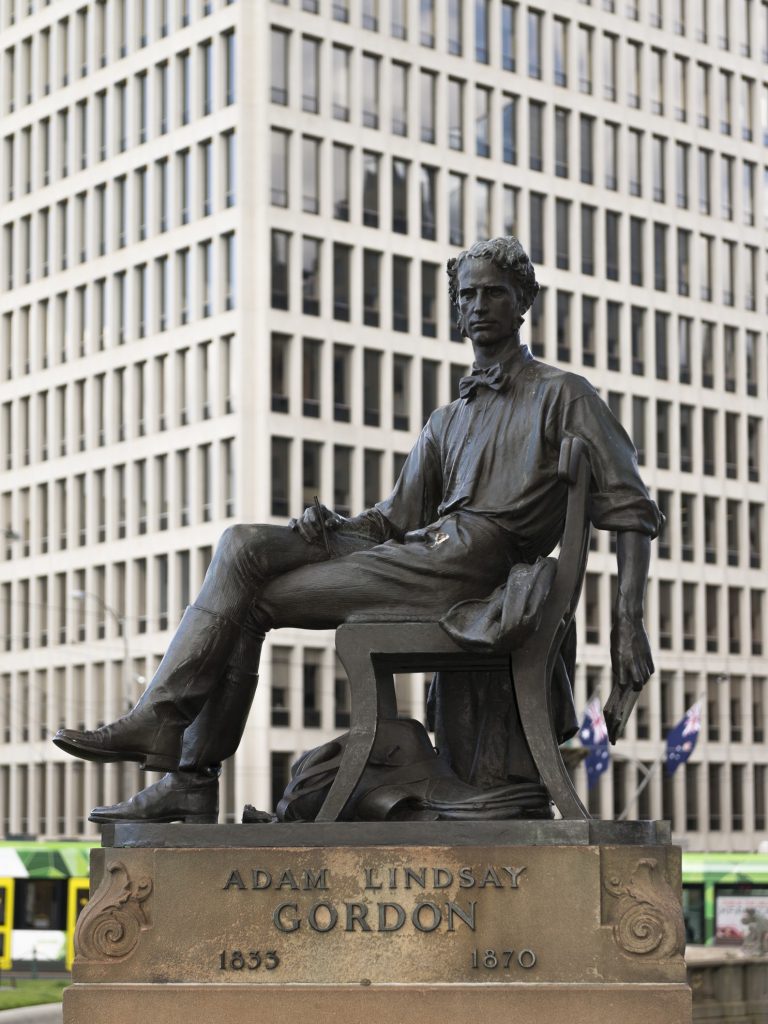
The Gordon cult
Non-fictionFrom a modern perspective Gordon makes an odd choice for a national poet, since he wrote only rarely about the country that embraced him. He set many of his popular verses in England and studded the others with the classical references familiar to an English gentleman. Yet before the passage of the 1931 Statute of Westminster – or, more exactly, until similar laws passed through the Australian Parliament in 1942 – Britain retained the legal right to determine foreign relations for the Australian Commonwealth. Accordingly, prior, during and for some time after the Great War, respectable Australian nationalism generally manifested as Empire patriotism.

the road of ghosts
FictionGraeme works with me almost every day of each school holidays. He conducts sessions that stretch from an hour into two. He teaches me how to shoot; he splinters my form down into nothing and then restructures it until it is exact. Fingertips: the ball slides through the air into the ring. He shuffles after each rebound, his returning pass precise. Graeme pours himself into me. He is patient. He is generous. He is firm, like a grandfather.

The Juansons
FictionIn the morning, she walks over to the Johnsons’ place and knocks on the door. Nothing. She calls the police, but once the officer on the phone understands that Norma is not the boy’s kin, he brushes her off. She makes coffee and goes into the living room and turns on CNN. A banner across the top of the screen reads: INSTANT E-DEPORTATIONS ACROSS US.
