
Featured in
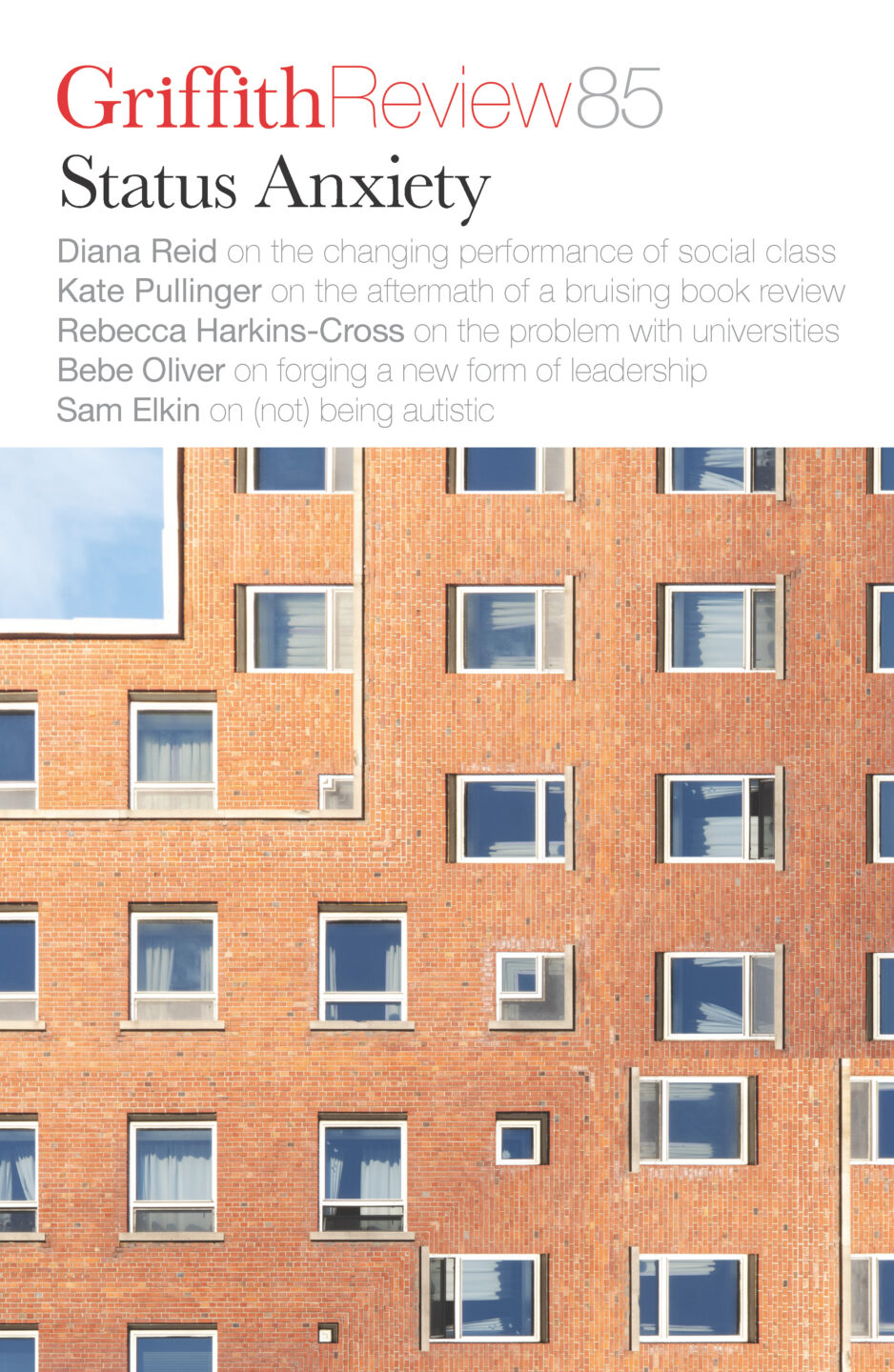
- Published 20240806
- ISBN: 978-1-922212-98-6
- Extent: 216pp
- Paperback, ePUB, PDF
Already a subscriber? Sign in here
If you are an educator or student wishing to access content for study purposes please contact us at griffithreview@griffith.edu.au
Share article
More from author

War of words
GR OnlineDuring my first news break at 6.30 am, I read the news reports about Israeli airstrikes out verbatim. But as I spoke into the mic, I felt unsettled by what I was saying. I had naively thought that this kind of bare-bones style of ‘raw’ AAP reportage is simply factual, and free from linguistic sleights of hand. But of course, I was wrong.
More from this edition

Habitat
PoetryIt was early. I recognised my fate in the bathroom mirror. Behind which he slept deep into the morning...

Animal control
FictionShe’d seen her mother a couple of times since the lockdown ended, but it was still a shock. Margaret had lost some vital density that seemed ethereal, although it was obviously about her body – the protruding cheekbones, eyes sunk too deep in her head and hair a wispy cap across her scalp. Only her hands looked the same – her piano-playing hands resting neatly in her lap, long-fingered and surprisingly preserved. The rest of her was ghostly, and there was a blink when she looked at her daughter and the lights didn’t go on. SJ felt a momentary sinkhole: not that, not yet.

Class acts
Non-fictionSocial media has made available to us whole new audiences and vectors for class and lifestyle performance. Where previously your political commitments or what books you were reading might have been topics of conversation with close friends at the pub, now they can be projected to hundreds or thousands of followers. Eating at a restaurant is another example; a previously private and intimately social act can now be a place to be seen, not by the people you’re dining with, or even the other patrons, but by everybody who follows you.
