
Featured in

- Published 20230502
- ISBN: 978-1-922212-83-2
- Extent: 264pp
- Paperback (234 x 153mm), eBook

Already a subscriber? Sign in here
If you are an educator or student wishing to access content for study purposes please contact us at griffithreview@griffith.edu.au
Share article
More from author

The Gordon cult
Non-fictionFrom a modern perspective Gordon makes an odd choice for a national poet, since he wrote only rarely about the country that embraced him. He set many of his popular verses in England and studded the others with the classical references familiar to an English gentleman. Yet before the passage of the 1931 Statute of Westminster – or, more exactly, until similar laws passed through the Australian Parliament in 1942 – Britain retained the legal right to determine foreign relations for the Australian Commonwealth. Accordingly, prior, during and for some time after the Great War, respectable Australian nationalism generally manifested as Empire patriotism.
More from this edition

See through a glass darkly
Non-fictionOn the way home that night we pass Oxford Street. It’s lit up and people are dancing in the windows of the clubs. There’s a rainbow flag on one of the buildings. Dad turns to look at this with a grimace: he shakes his head and sucks his teeth. He turns the volume up on the CD player and focuses on the road ahead.

Rare
PoetryThere are many ways to carry a story. My father smothered his stories with bravado. Here he is, laughing at the sea drenching him on the deck.
Back to the red earth
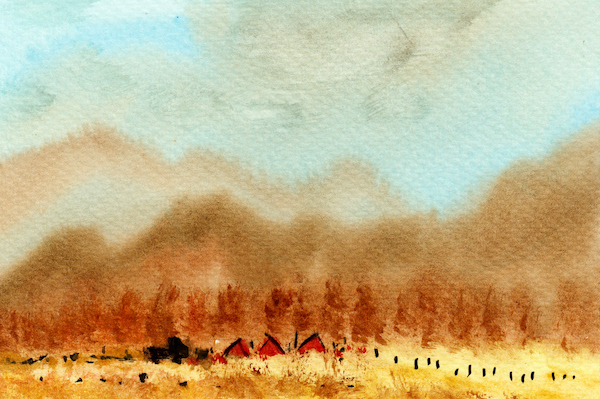
FictionBefore she opens her eyes, she knows with the very same certainty that she is of this land that Juanjo, her lover and the father of her five guris, isn’t going to be asleep by her side. But she could for once be wrong. So, she stretches out her arm and feels around. Instead, her fingertips touch his perfectly tucked-in bedsheet. His side of the bed is vacant like the rows of this year’s failed crop.
