
Featured in

- Published 20230502
- ISBN: 978-1-922212-83-2
- Extent: 264pp
- Paperback (234 x 153mm), eBook

Already a subscriber? Sign in here
If you are an educator or student wishing to access content for study purposes please contact us at griffithreview@griffith.edu.au
Share article
About the author

Vidyan Ravinthiran
Vidyan Ravinthiran is an associate professor of English literature at Harvard University. He’s the author of two books of verse: Grun-tu-molani (2014), which was...
More from this edition
The transhuman era
Non-fictionThe story of the transhuman era has much in common with the creation myths of old – and with religious tales of transcendence. It heralds the emergence of a powerful – omniscient, omnipresent – force (AI) possessing intelligence that far exceeds our own. And lends itself to stories that play off destruction against what you could term ‘salvation’, in the form of digital immortality.
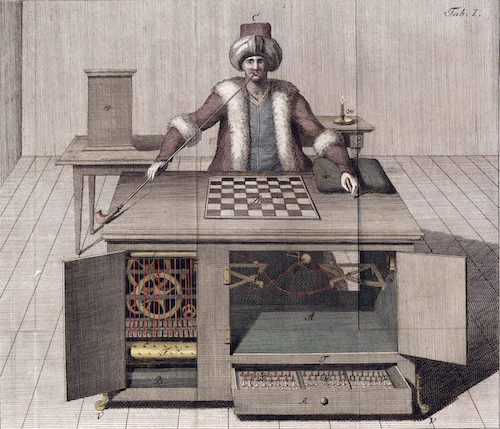
The emperor’s new opponent
Non-fictionAsk many of my colleagues to define AI and they will tell you…that it’s about getting computers to do tasks that humans require intelligence to perform. Or, to put it another way, it’s about faking human performance on intelligent tasks.
The age of discovery
In ConversationPrior to Homo sapiens, populations might have just moved on or gone extinct in the face of environmental risks, whereas with Homo sapiens we were able to disperse widely across the world despite great ecological challenges. The underlying reason for that may be rooted in our social relations, our high level of co-operation – we don’t necessarily see that with earlier human species.
